

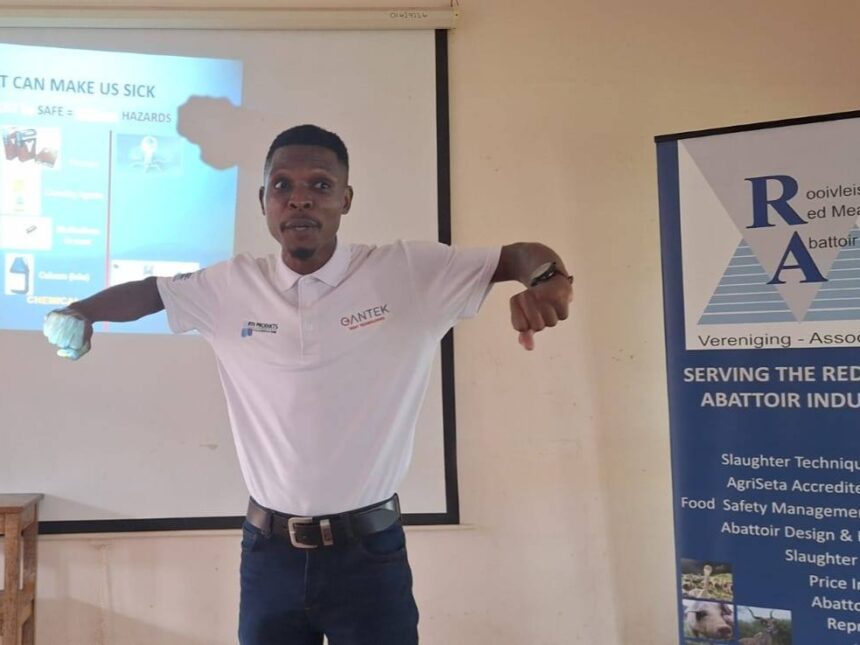
Efforts to strengthen livestock health and food safety in South Africa are gaining momentum as targeted training reaches critical points in the value chain. In the Vhembe District, abattoir owners and workers are taking part in a focused two day training programme designed to improve hygiene standards and support the national campaign to vaccinate livestock against Foot and Mouth Disease. This initiative comes at a time when disease control and safe meat production are under close attention across the country. Abattoirs play a central role in both public health and the agricultural economy, which makes skills development in this area essential. By equipping operators with practical knowledge, the programme aims to improve both compliance and daily operations.
The training is being hosted at the LDARD Vhembe District office and is led by the Limpopo Department of Agriculture and Rural Development Animal Health unit in partnership with the Red Meat Abattoir Association. It brings together both low throughput and high throughput abattoir operators, ensuring that the content addresses a wide range of operational needs. Participants are receiving hands on guidance that reflects real working conditions, which allows them to apply what they learn immediately. The collaboration between government and industry bodies ensures that the training meets both regulatory standards and practical industry demands. This approach strengthens the impact of the programme and increases its relevance for all participants involved.
A strong focus of the training is on hygiene and safe meat handling practices, which are essential for protecting consumers and maintaining product quality. Participants are being taught how to maintain clean and sanitary facilities, which reduces the risk of contamination during processing. Proper hygiene is not only a regulatory requirement but also a key factor in building trust with buyers and the public. The training emphasizes routine cleaning procedures, waste management, and the importance of maintaining a controlled environment. These practices help ensure that meat leaving the abattoir is safe for consumption and meets required standards.
The programme also covers a wide range of technical topics that are critical to modern abattoir operations. These include animal welfare, regulations related to slaughter, and food safety principles that guide the entire process. Participants are introduced to microbiological organisms and how they affect meat safety, along with methods to control and reduce their presence. Understanding how microorganisms spread and how to manage them is a key part of preventing foodborne illnesses. Personal hygiene among workers is also highlighted as a major factor in maintaining safe processing conditions. These combined areas of training provide a comprehensive foundation for improving standards across the board.
Organisers of the programme have made it clear that the goal is to strengthen compliance with health regulations while improving the overall quality of meat production in the district. By raising standards at the abattoir level, the programme supports broader efforts to control diseases such as Foot and Mouth Disease. Clean and well managed facilities reduce the risk of disease transmission and support national vaccination strategies. This connection between hygiene practices and disease control is a critical part of the training message. It ensures that participants understand their role within the larger agricultural system.
Abattoir owners and workers who are attending the training have responded positively to the initiative. Many describe the sessions as practical and directly relevant to their daily work. They have noted that the information provided can be implemented immediately to improve their operations. This type of feedback highlights the value of training that is both accessible and applicable. When participants see clear benefits, they are more likely to adopt and maintain improved practices over time.
Mr Jonathan Boke, a training facilitator from the Red Meat Abattoir Association, has emphasized the importance of maintaining high hygiene standards within abattoirs. He explained that improving these standards protects consumers while also contributing to the control of animal diseases. His insights reinforce the idea that food safety and animal health are closely linked. By addressing both areas at once, the training creates a more effective and sustainable impact. This perspective helps participants understand the broader importance of their work beyond daily operations.
The Vhembe abattoir training programme is expected to deliver long term benefits for both the local community and the agricultural sector. By equipping participants with the right skills and knowledge, it supports the development of safer and more efficient facilities. Improved hygiene and compliance will lead to better quality meat and increased confidence among consumers. At the same time, the programme strengthens efforts to control livestock diseases through better practices at critical points in the value chain. With continued support and similar initiatives, training programmes like this can play a key role in building a stronger and more resilient agricultural industry in South Africa.
Join 'Farmers Mag' WhatsApp Channel
Get the latest Farming news and tips delivered straight to your WhatsApp
CLICK HERE TO JOIN




