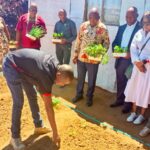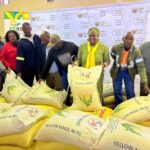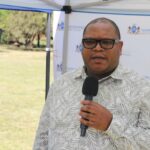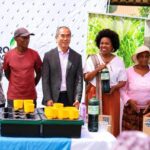

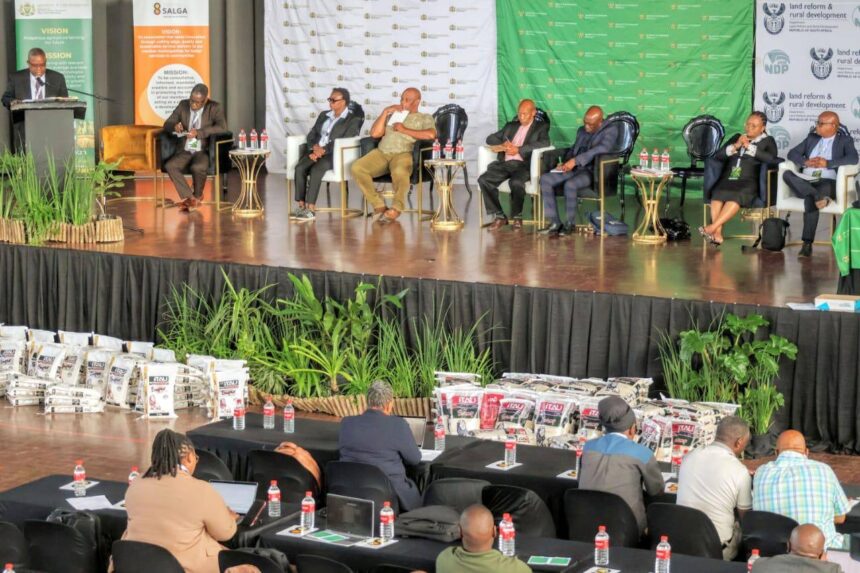
The Rural Development Indaba at Bluegumbosch Multi-Purpose Centre in Qwaqwa continues to create real opportunities for farmers and rural communities across the Free State, with the second day placing strong focus on economic investment through the Agriculture and Agro-Processing Master Plan (AAMP). The event brings together farmers, farm workers, community members, government leaders, and traditional authorities to engage in practical discussions that directly affect agricultural productivity and rural livelihoods. Under the theme “Policy, Investment and Community Action for Inclusive and Sustainable Rural Development,” the indaba creates a space where ideas can translate into action. The second day builds on earlier discussions by shifting attention toward implementation, investment planning, and job creation. This approach ensures that rural communities are not only informed but also actively involved in shaping their economic future.
Farmers, farm dwellers, and workers are given a direct platform to present proposals that address local economic growth and employment opportunities. This participation allows those on the ground to highlight real challenges such as limited market access, lack of infrastructure, and barriers to value addition. By contributing their ideas, farmers help shape solutions that are practical and relevant to their daily operations. Government representatives provide guidance on how these proposals can align with the Agriculture and Agro-Processing Master Plan, ensuring that local initiatives connect with national development strategies. This process empowers farmers to take ownership of development while gaining insight into available support systems and funding pathways.
Key stakeholders, including Prof. Sethulego Matebesi from the University of the Free State, along with senior officials from the Department of Cooperative Governance and Traditional Affairs and the Department of Land Reform and Rural Development, continue to guide discussions. Traditional leaders such as Morena Mopeli, Morena Peete, Morena Mota, and Morena Moloi also play an important role in representing community interests and ensuring that rural voices are heard. Their involvement strengthens the link between policy and local realities, helping to bridge gaps between government planning and farm-level implementation. Engagement with commodity groups and agricultural stakeholders further enriches the discussions by bringing sector-specific insights. This collective participation ensures that outcomes from the indaba are inclusive and grounded in real agricultural needs.
A strong focus during the second day is placed on investment strategies and how farmers can access financial and technical support to expand their operations. Experts outline practical steps for improving production, strengthening agro-processing capabilities, and increasing participation in local and regional markets. The Agriculture and Agro-Processing Master Plan is positioned as a key driver for integrating farming with value addition, which can increase income and create jobs in rural areas. Farmers are encouraged to adopt better production methods, invest in processing, and explore cooperative models that can improve efficiency and scale. These discussions provide clear direction on how rural agricultural businesses can grow in a structured and sustainable way.
The indaba also emphasizes the importance of turning discussions into measurable outcomes that benefit rural communities. Stakeholders explore ways to address gaps in infrastructure, skills development, and service delivery that often limit growth in farming areas. By focusing on collaboration, the sessions highlight how partnerships between government, communities, and the private sector can unlock new opportunities. Farmers gain access to networks that include technical advisors, funding institutions, and fellow producers, which can support long-term development. This environment of shared knowledge and cooperation strengthens the ability of rural communities to respond to challenges and adapt to changing market demands.
The Rural Development Indaba continues to prove its value as a platform that connects policy with practical action for farmers. By focusing on the Agriculture and Agro-Processing Master Plan and encouraging direct participation from rural stakeholders, the event equips communities with tools to drive economic growth and job creation. Farmers leave with clearer strategies, stronger networks, and better understanding of how to access resources that can improve their operations. The emphasis on investment, collaboration, and local input ensures that development is both inclusive and sustainable. This ongoing engagement positions rural areas in the Free State to achieve stronger agricultural output, increased employment, and long-term economic resilience.
Join 'Farmers Mag' WhatsApp Channel
Get the latest Farming news and tips delivered straight to your WhatsApp
CLICK HERE TO JOIN