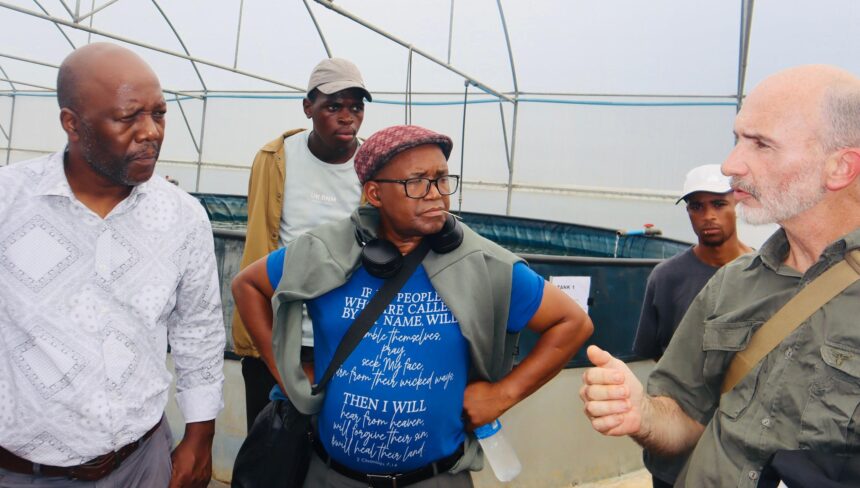
The Mpumalanga Farmers Outreach Programme on Agritech Technology Validation has marked a significant step forward in modernizing agriculture within the province. Delivered through a strategic partnership between the Department of Agriculture, Rural Development, Land and Environmental Affairs, the Department of Forestry, Fisheries and the Environment, the United Nations Development Programme, 22 On Sloane, and the People of Japan, the initiative brought together key stakeholders and farmers in a practical learning environment. The programme focused on introducing innovative technologies that can improve productivity while addressing climate related challenges. It created a platform where farmers could engage directly with experts and technology providers. This approach ensures that solutions are not only introduced but also understood and tested in real farming conditions.
The outreach programme took place at the DARDLEA supported mixed farming Phambili Ngombono Farm near Ngodwana, which served as a practical demonstration site. This setting allowed farmers to observe how agritech solutions can be integrated into existing farming systems. The programme forms part of the United Nations Development Programme initiative aimed at leveraging agritech and artificial intelligence for sustainable agricultural and export development in South Africa. The core objective is to validate selected technologies through direct engagement with farming communities. This ensures that the tools introduced are practical, affordable, and suited to local farming conditions. By testing these solutions on the ground, the programme reduces the risk of introducing technologies that farmers cannot sustain.
A key focus of the outreach programme was aquaculture, which is gaining attention as a viable and sustainable farming practice. Demonstrations highlighted fish farming techniques and the use of modern tools such as automatic feeders and aquaponics systems. These technologies are designed to improve efficiency by reducing manual labor and optimizing feeding schedules. Aquaponics systems also offer an integrated approach, combining fish farming with crop production in a closed loop system that maximizes resource use. This method reduces water waste and creates an opportunity for farmers to diversify their production. Currently, Mpumalanga stands out as the only province actively implementing aquaculture technology funded through this initiative, which places it at the forefront of innovation in this sector.
Farmers who attended the programme were given the opportunity to interact directly with the technologies and understand how they function in real time. They learned how automatic feeders can ensure consistent feeding patterns, which leads to healthier fish and improved growth rates. They also explored how aquaponics systems can produce both fish and vegetables within the same setup, increasing overall farm output. These practical demonstrations helped farmers see the direct benefits of adopting such technologies. It also allowed them to ask questions and receive immediate answers from experts. This level of engagement builds confidence and encourages adoption of new farming methods.
The programme also emphasized the importance of climate responsive agriculture in the face of changing environmental conditions. Farmers in Mpumalanga, like many across South Africa, face increasing pressure from unpredictable weather patterns and resource constraints. Agritech solutions introduced through the outreach programme are designed to address these challenges by improving efficiency and reducing dependency on traditional methods. By focusing on technologies that conserve water and optimize production, the programme supports long term sustainability. It also aligns with broader goals of improving food security and increasing agricultural exports.
The success of the Mpumalanga Farmers Outreach Programme highlights the value of strong partnerships in driving agricultural development. Each partner brought unique expertise and resources that contributed to the overall impact of the initiative. The collaboration ensured that farmers received not only technical knowledge but also support that can help them implement what they have learned. It also demonstrated how public and private sector cooperation can accelerate innovation in agriculture. This model can be replicated in other regions to expand the reach of agritech solutions.
Farmers responded positively to the programme, expressing interest in adopting the technologies introduced during the sessions. Many recognized the potential of aquaculture and other agritech tools to improve their productivity and income. The opportunity to see these technologies in action played a key role in building trust and interest. As more farmers begin to implement these solutions, the benefits are expected to extend beyond individual farms to the wider agricultural sector. This will contribute to stronger rural economies and more resilient farming communities.
The Mpumalanga Farmers Outreach Programme on Agritech Technology Validation has set a clear example of how innovation can be introduced effectively at grassroots level. By focusing on practical demonstrations, farmer engagement, and climate responsive solutions, the initiative has created a strong foundation for future growth. The emphasis on aquaculture and modern farming technologies positions Mpumalanga as a leader in adopting new agricultural approaches. As these efforts continue, they will play a vital role in transforming agriculture, improving livelihoods, and ensuring sustainable food production in the province.
Join 'Farmers Mag' WhatsApp Channel
Get the latest Farming news and tips delivered straight to your WhatsApp
CLICK HERE TO JOIN