

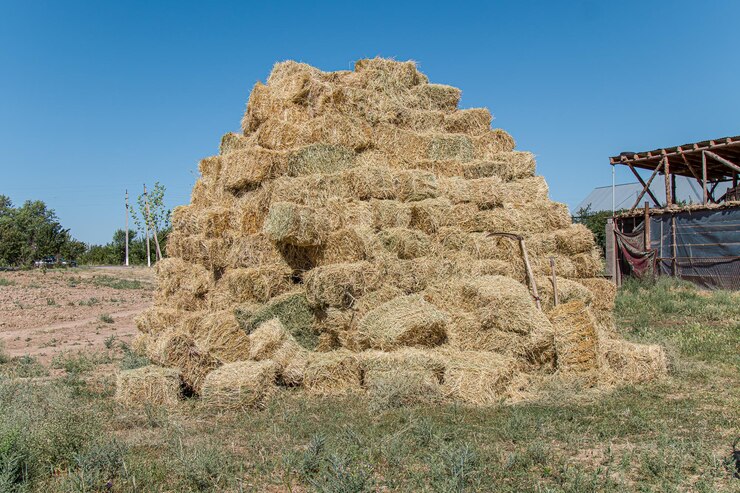
The Limpopo Department of Agriculture and Rural Development continues to take practical steps to support smallholder livestock farmers through targeted training programmes focused on silage and hay bale making. Across different regions, including Vhembe Central under the Khumbe Service Centre, farmers are gaining access to essential knowledge that helps them manage one of their biggest challenges, feed shortages during dry seasons. Many farmers rely heavily on natural grazing, which becomes unreliable during periods of low rainfall. This often results in weakened livestock, reduced productivity, and financial strain. By introducing sustainable feed preservation methods, the department is helping farmers build resilience and protect their livelihoods.
In Vhembe Central, smallholder farmers convened at Christ Centre Church in Lwamondo Village for a dedicated training session that brought together participants from across the Khumbe Service Centre. The initiative forms part of a broader strategy to empower farmers with practical and innovative techniques that improve livestock production. It also creates a platform for farmers to learn from each other while engaging directly with agricultural experts. These sessions are designed to be accessible and relevant, ensuring that farmers can apply what they learn within their own farming environments. The focus remains on equipping farmers with skills that deliver immediate and long term value.
The success of these training programmes is driven by strong collaboration between multiple institutions. The Limpopo Department of Agriculture and Rural Development worked alongside Toowomba Agricultural Research Station, the National Department of Agriculture, the South African National Biodiversity Institute, and the Deutsche Gesellschaft für Internationale Zusammenarbeit. This partnership brings together scientific expertise, field experience, and development support to deliver well rounded training. Farmers benefit from a combination of research based knowledge and practical guidance that addresses real farming challenges. This coordinated approach ensures that the training is both credible and impactful.
During the sessions, experts provided detailed insights into the importance of proper feed management and its direct impact on livestock health. Mr Ntuwiseni Mmbi, a Scientist for Veld and Rangeland at Toowomba Research Station, highlighted that feed shortages remain a major threat to livestock production in Limpopo. He explained that silage and hay bale production offer reliable solutions that allow farmers to store feed during periods of abundance. He also emphasized that these methods create opportunities for farmers to generate additional income by selling surplus feed. This approach supports both food security and economic growth within rural communities.
Farmers were taken through both theoretical and practical aspects of silage and hay production to ensure a complete understanding of the processes involved. In hay making, they learned that various types of grass can be used as long as the grass is dried for two to three days to reduce moisture content. This step is critical to prevent spoilage and maintain nutritional value. In silage production, farmers were encouraged to use crops such as maize, Napier grass, and fodder sorghum due to their high sugar content. These crops support an effective fermentation process, which helps preserve nutrients and reduces the need for additives like molasses. The training emphasized correct timing, proper handling, and effective storage to ensure quality feed.
Practical demonstrations played a key role in reinforcing the lessons taught during the sessions. Farmers observed and participated in the process of cutting, drying, compacting, and storing feed. They learned how to seal silage properly to create the right conditions for fermentation and how to handle hay to avoid contamination and nutrient loss. These hands on activities allowed farmers to gain confidence and ask specific questions based on their own experiences. Immediate feedback from experts helped clarify common mistakes and improve technique. This practical approach increases the likelihood that farmers will successfully adopt these methods on their farms.
The benefits of these training initiatives extend beyond individual farmers and contribute to broader agricultural development in the province. When farmers are able to maintain a steady supply of nutritious feed, livestock productivity becomes more stable. This leads to improved meat and dairy output, which supports local markets and household income. It also reduces reliance on expensive commercial feed, allowing farmers to invest in other areas of their operations. Over time, these improvements strengthen rural economies and promote sustainable farming practices.
Farmers who attended the training sessions expressed strong appreciation for the knowledge and skills they gained. Many indicated their willingness to implement silage and hay bale production techniques in their daily operations. Some also committed to sharing what they learned with other farmers in their communities, which can expand the reach of the initiative. This positive response shows that practical, well structured training can drive real change at grassroots level. It also highlights the importance of continued support and engagement with smallholder farmers.
The Limpopo Department of Agriculture and Rural Development has demonstrated a clear and effective approach to addressing livestock farming challenges through these training programmes. By focusing on practical solutions such as silage and hay bale production, the department is helping farmers secure feed, improve productivity, and build resilience against climate related risks. The collaborative model ensures that farmers receive accurate and useful information that they can apply immediately. As adoption increases across different regions, these initiatives will play a key role in strengthening food security and supporting sustainable agricultural growth in Limpopo.
Join 'Farmers Mag' WhatsApp Channel
Get the latest Farming news and tips delivered straight to your WhatsApp
CLICK HERE TO JOIN




