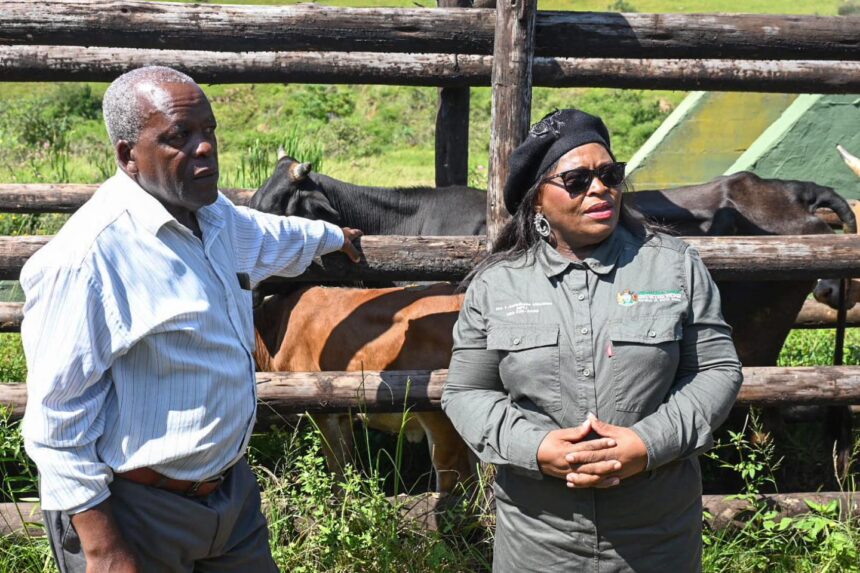
The KwaZulu-Natal Department of Agriculture and Rural Development, under the leadership of MEC Thembeni kaMadlopha-Mthethwa, has successfully completed the vaccination of cloven-hoofed animals against Foot-and-Mouth Disease (FMD) in the Harry Gwala District. This district, situated in the southern part of the province, saw over 250,000 vaccines administered across four local municipalities from 386 dip tanks and farms, although final reporting is still being compiled. The vaccination drive represents a crucial step in controlling FMD outbreaks and protecting both communal and commercial livestock in the province. Vaccination coverage has been carefully tracked, with the largest numbers administered in the Dr. Nkosazana Dlamini-Zuma municipality at 85,032 doses, followed by Greater Kokstad with 59,557, Johannes Phumani Phungula with 59,326, and uMzimkhulu at 47,392. The district’s vaccination effort complements earlier campaigns in the Ugu District, where more than 54,000 cattle were inoculated between February 26 and March 4, 2026.
The campaign utilized BioGenesis Bago and Dollvet vaccines to ensure effective protection against FMD, covering both communal and commercial cattle herds. While most farms in Harry Gwala have completed vaccination, work continues on farms under the Land Redistribution for Agricultural Development programme to ensure comprehensive coverage. Veterinary teams are focused on precision and efficiency, ensuring that every eligible animal receives the required doses. Such widespread vaccination efforts are critical in maintaining livestock health and preventing economic losses associated with outbreaks. By systematically targeting multiple municipalities, the Department is working to contain the spread of the disease and protect the province’s agricultural productivity.
In addition to cattle, the Department has responded to FMD-positive cases on a pig farm in Dannhauser, located in the Amajuba District. Here, veterinary teams have administered 13,400 vaccines to pigs and 4,200 to cattle across three dipping tanks and farms. This intervention is aimed at containing the disease, reducing the viral load, and preventing further outbreaks in the region. Addressing infections in multiple livestock species demonstrates the Department’s commitment to comprehensive disease management. The proactive approach helps to safeguard both animal health and local food security while minimizing disruption to farming operations.
Vaccination campaigns are also progressing in other districts. Veterinary teams have inoculated 21,500 cattle in the uMgungundlovu District, 3,200 in uThukela District, and 140 in uMzinyathi District, with further campaigns to be announced. The Department will now shift focus to the uMkhanyakude District Municipality, with a scheduled vaccination plan from March 30 to April 8, 2026. These targeted campaigns follow a strategic timeline to ensure that all high-risk areas receive timely interventions, limiting the spread of FMD across the province. Maintaining momentum in these districts is essential to achieving widespread immunity and reducing future outbreaks.
To manage animals from FMD-affected farms, MEC kaMadlopha-Mthethwa confirmed the designation of five abattoirs: Karen Beef, Glencoe, Darnell, Boston, and Dalton. These facilities are authorized to slaughter animals from infected farms under strict biosecurity measures. Abattoir owners are required to facilitate public comment on applications for designation, ensuring transparency in operations. Properly designated abattoirs are critical for controlling disease transmission while allowing safe processing of livestock. This framework supports both disease containment and continuity in the meat supply chain.
The Department has strengthened its response through public-private partnerships, collaborating with the Milk Producers Organisation, the KwaZulu-Natal Agricultural Union (KWANALU), and Tip Top Dairy. These organisations assist with vaccine distribution and permit management, ensuring the efficiency of the vaccination programme. Their support enables veterinary teams to focus on field operations while maintaining smooth administrative processes. Such partnerships enhance the capacity of the Department to respond quickly to outbreaks and reinforce long-term livestock health management. Collaboration with private stakeholders ensures that both communal and commercial farmers receive timely and effective support.
To bolster operational capacity, the Department is finalizing the recruitment of 60 Animal Health Technicians, 80 Data Capturers, and 22 Administration Clerks by the end of March 2026. These new personnel will strengthen vaccination teams, improve data management, and enhance administrative support for ongoing FMD campaigns. Increased staffing ensures that the Department can maintain high standards of coverage and monitoring across all districts. Skilled and adequately resourced teams are vital for the timely detection, reporting, and control of disease outbreaks. The recruitment drive reflects a proactive approach to sustaining long-term animal health in KwaZulu-Natal.
The comprehensive vaccination campaign across multiple districts, combined with designated abattoirs, private sector collaboration, and expanded staffing, demonstrates KwaZulu-Natal’s commitment to controlling Foot-and-Mouth Disease. By covering both cattle and pigs, targeting high-risk areas, and ensuring proper biosecurity measures, the Department aims to protect livestock, support farmers, and safeguard food security. Continued vigilance, adherence to vaccination schedules, and community cooperation remain essential for success. MEC kaMadlopha-Mthethwa’s leadership and the coordinated effort of veterinary teams reinforce the province’s resilience against FMD. These measures collectively strengthen the province’s agricultural sector and help ensure sustainable livestock production for the future.
Join 'Farmers Mag' WhatsApp Channel
Get the latest Farming news and tips delivered straight to your WhatsApp
CLICK HERE TO JOIN