

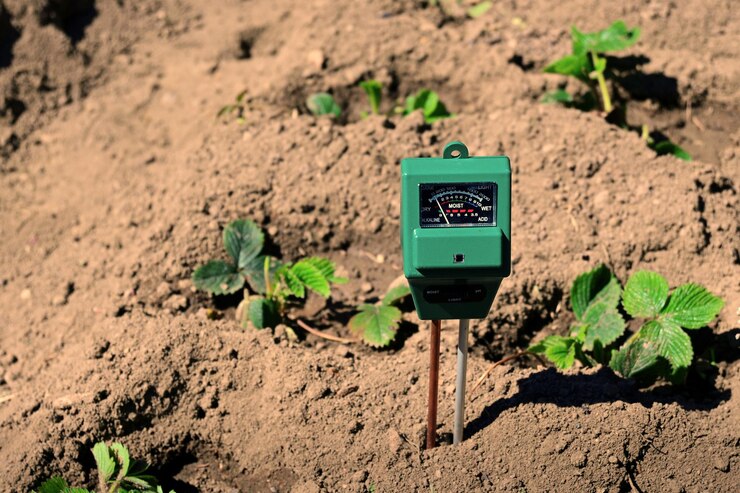
Efficient irrigation is critical for small- and medium-scale farmers who want to maximize crop yields while conserving water. Soil moisture sensors provide a practical, cost-effective way to monitor soil water levels and make informed irrigation decisions. By using these sensors, farmers can avoid overwatering, reduce water waste, and protect crops from stress caused by drought or waterlogging. Understanding how to select, install, and use soil moisture sensors is key to improving farm productivity.
Soil moisture sensors work by measuring the water content in the soil. There are several types, including resistive, capacitive, and tensiometer-based sensors. Resistive sensors detect changes in soil resistance as it dries or becomes wet. Capacitive sensors measure the dielectric permittivity of the soil, providing accurate moisture readings. Tensiometers monitor the tension of water in the soil and are often used for precise irrigation scheduling. Each type has advantages depending on budget, farm size, and crop type.
Installation of soil moisture sensors is simple but requires careful planning. Sensors should be placed at crop root depth and in representative areas of the field to provide reliable data. Multiple sensors may be needed for larger fields or areas with variable soil types. Connecting the sensors to a data logger or smartphone app allows real-time monitoring. Farmers can use this information to irrigate only when necessary, saving water and energy while improving crop growth.
Using soil moisture sensors offers measurable benefits. Farmers can reduce water use by up to 30 percent, lower electricity or fuel costs for pumping, and minimize nutrient leaching caused by over-irrigation. Sensors also help protect crops during dry spells by alerting farmers when irrigation is urgently needed. Integrating sensors with drip or sprinkler systems further enhances efficiency, allowing automated irrigation based on soil moisture levels.
Selecting a cost-effective sensor depends on farm size, crop type, and budget. Simple resistive or capacitive sensors are ideal for small-scale farms, while larger commercial operations may invest in advanced automated systems. Regular maintenance, calibration, and proper placement ensure long-term reliability.
Soil moisture sensors are a practical investment for farmers seeking smarter water management. They reduce waste, increase crop yields, and support sustainable irrigation practices. By adopting this technology, farmers can make irrigation decisions with confidence, even during periods of unpredictable rainfall.
Join 'Farmers Mag' WhatsApp Channel
Get the latest Farming news and tips delivered straight to your WhatsApp
CLICK HERE TO JOIN




