

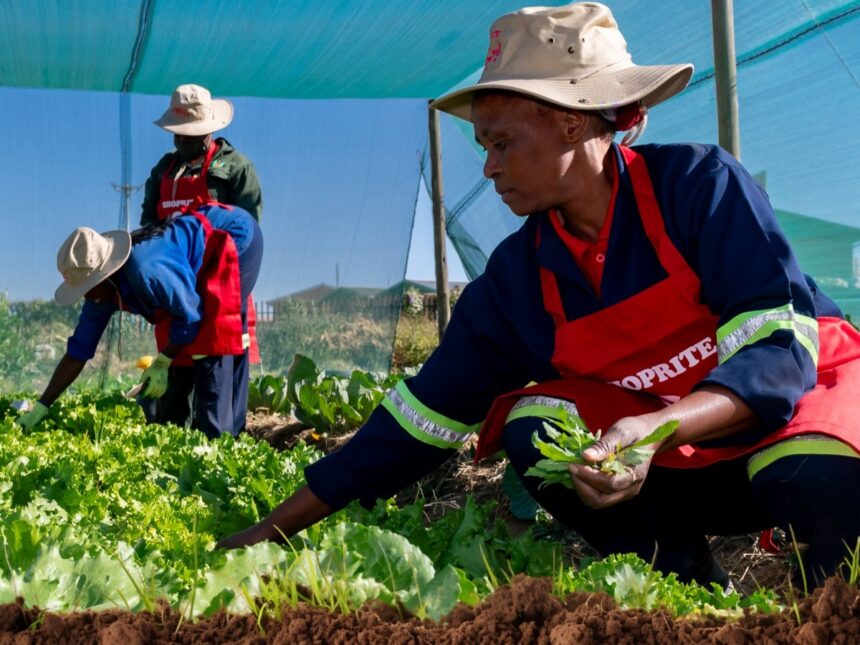
Across South Africa, small-scale food production is transforming lives and strengthening communities. Supported by the Shoprite Group in partnership with organisations such as Urban Harvest and Food & Trees for Africa, community and household gardens are enabling families to grow their own food, improve nutrition, and create small-scale income opportunities. From backyard patches and school plots to larger community farms, these initiatives show that sustainable farming practices can thrive even in challenging conditions.
Many of the supported gardens use climate-resilient methods such as drip irrigation, water harvesting, and permaculture techniques. These practices allow farmers to maintain production during droughts and heavy rainfall, making gardens more reliable sources of fresh produce. Last year, close to 300 community gardens, along with thousands of household food gardens, produced over 106 000kg of vegetables. Beyond food production, these gardens teach valuable agricultural skills and give community members opportunities to sell surplus harvests.
The ‘Act for Change’ programme and Market Days help gardeners sell produce at local Shoprite and Checkers stores. The programme also provides hands-on training in irrigation, composting, permaculture, and record-keeping, giving growers the tools to manage sustainable operations. The Food Garden Competition rewards winning gardens with infrastructure and training support ranging from R225 000 to R120 000, helping them expand and maintain their operations.
Success stories highlight the practical impact of these gardens. In Botleng, Mpumalanga, Nomxoliswa Makhabane transformed a small lockdown garden into Ekuqaleni Genesis Farm, which now feeds over 150 people. The farm uses a water-harvesting system, shade netting, and permaculture methods to improve yields. In KwaZulu-Natal, the Siyaphambili Women’s Club runs a 2.5-hectare site where 11 women grow vegetables for their families and local sales, demonstrating effective crop rotation and soil management on a communal scale.
Gardening also supports youth and rehabilitation programmes. In KwaMashu, the Iqabungelihle Garden Project teaches agricultural skills to seven unemployed youth while supplying fresh produce to their community. In Randfontein, the Carroll Shaw Memorial Centre uses gardening as part of its rehabilitation programme for men recovering from abuse, providing both nutrition and practical skills. The Qholaqhwe Village garden in the Free State produces vegetables for a local creche, simultaneously creating youth employment and improving food security for more than 200 children.
These projects offer practical lessons for farmers: start small, use climate-smart techniques, implement proper irrigation and composting, and consider cooperative or community-based approaches for scaling. Across South Africa, gardens like Zama Ndlovu’s Co-operative in Orange Farm, Noah Garden in Khayelitsha, Dikonyana Community Centre in Mangaung, and Victory Christian School in Tsolo show that with proper training and support, even previously unused plots can produce high-quality, nutritious food for local communities.
By combining practical farming methods with community organisation and training, these initiatives illustrate that value lies not just in the crops themselves, but in the skills, resilience, and income opportunities they create. For farmers looking to expand small-scale production, these gardens provide a blueprint for success, demonstrating how sustainable practices can feed communities while creating long-term livelihoods.
Join 'Farmers Mag' WhatsApp Channel
Get the latest Farming news and tips delivered straight to your WhatsApp
CLICK HERE TO JOIN




