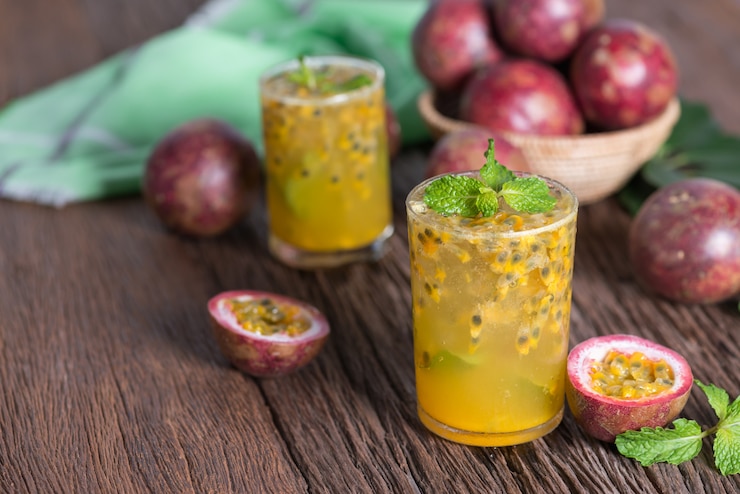
Passion fruit presents a strong value addition opportunity for South African farmers. The crop performs well in many parts of the country. Demand continues to grow in retail, hospitality, and informal markets. Processing passion fruit into juice and desserts helps you extend shelf life, reduce post-harvest losses, and increase income per kilogram.
Why Passion Fruit Is Ideal for Value Addition
Passion fruit has a high juice yield. Each fruit can deliver up to 40 percent extractable juice. The flavour is concentrated, which makes it cost effective for processing. The fruit is rich in vitamin C, fibre, and antioxidants, which appeals to health-focused consumers.
Value addition allows you to use fruit that does not meet fresh market appearance standards. This improves overall farm profitability and reduces waste during peak harvest periods.
How to Process Passion Fruit into Juice
Juice production is one of the easiest ways to add value. You need ripe fruit, basic equipment, and strict hygiene.
Harvest fruit when the skin becomes wrinkled. This stage offers the best sweetness and flavour. Wash fruit thoroughly. Cut open and scoop out the pulp. Use a sieve or pulper to separate seeds from juice. Some processors keep a small amount of seed for texture.
Heat the juice gently to pasteurise. Avoid boiling to preserve flavour and nutrients. Bottle while hot in sterilised containers. Label clearly with production and expiry dates.
Popular juice blends in South Africa include passion fruit mixed with mango, pineapple, orange, or guava. Blending lowers acidity and increases market appeal.
Turning Passion Fruit into Desserts
Dessert products offer higher margins than juice alone. Passion fruit works well in both formal and informal food markets.
Common products include frozen pulp, puree, syrup, jam, curd, and concentrate. Bakeries, restaurants, lodges, and home bakers all use passion fruit regularly.
Passion fruit curd sells well in jars and pairs with cakes and pastries. Syrup suits beverages, desserts, and cocktails. Jam and marmalade offer longer shelf life and suit retail shelves. Frozen puree allows year-round sales and consistent quality outside the harvest season.
Food Safety and Compliance Requirements
Food safety protects your customers and your business. Use clean water, sanitised equipment, and protective clothing during processing.
If you sell at scale, register your facility with local authorities. Proper labelling matters when selling to retailers. Include ingredients, allergens, net weight, and expiry dates. Shelf life testing builds trust and reduces risk.
Markets You Can Sell To
Fresh produce markets accept bottled juice and preserves. Informal markets offer fast-moving cash sales. Restaurants and lodges prefer consistent quality and bulk supply. Health shops favour low sugar and additive-free products.
Online sales also offer growth. Social media and local delivery platforms help small producers reach customers directly.
Costs and Profit Potential
Value addition increases input costs but significantly improves returns. Processed passion fruit products often sell for two to four times the value of fresh fruit per kilogram. Processing also limits losses during high supply periods.
You can start small. Basic equipment includes knives, sieves, blenders, pots, and a reliable heat source. As demand grows, you can invest in semi-automated systems.
Passion fruit offers more than fresh market sales. Juice and dessert processing turn surplus fruit into consistent income. You gain better control over pricing and market access. With good hygiene, smart branding, and reliable supply, passion fruit value addition can become a strong and sustainable part of your farming business in South Africa.
Join 'Farmers Mag' WhatsApp Channel
Get the latest Farming news and tips delivered straight to your WhatsApp
CLICK HERE TO JOIN