

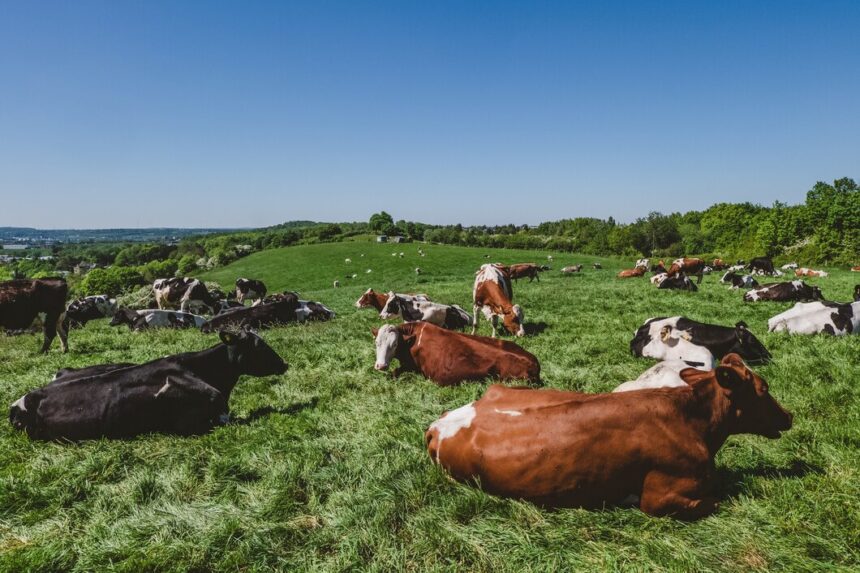
Since 2022, an Eastern Cape veterinarian has been studying the effects of sporidesmin poisoning in dairy cows grazing on ryegrass during the summer months. Sporidesmin, a mycotoxin produced by the fungus Pseudopithomyces chartarum, causes facial eczema, liver damage, and photosensitivity in ruminants. Dr Anthony Davis, of Humansdorp Vet Clinic, warns that similar outbreaks could occur in other parts of South Africa where cattle graze on ryegrass.
The investigation began after a local dairy farmer noticed in 2020 that 56 of his 400 cows showed severe teat sensitivity and skin irritation during milking. The affected areas were primarily non-pigmented skin, and some cows developed clear lesions. Three animals were culled due to the severity of their condition. The herd consisted of crossbred Jersey, Friesian, and Montbéliarde cattle.
Dr Davis collected pasture samples and sent them to the Forestry and Agricultural Biotechnology Institute at the University of Pretoria. Laboratory analysis confirmed the presence of Pseudopithomyces chartarum, confirming sporidesmin poisoning as the cause. His research focuses on understanding the impact of this condition on animals and the dairy industry, while FABI examines the occurrence of the fungus in ryegrass.
Clinical signs observed include extreme sensitivity of the udder, secondary photosensitivity, and high serum gamma-glutamyl transpeptidase (GGT) levels ranging from 2,143 to 5,177 IU/L, indicating significant liver damage. The fungus was detected on pastures consisting of kikuyu and perennial ryegrass under center-pivot irrigation, rotated with dryland kikuyu, Italian ryegrass, and sorghum.
Treatment with zinc oxide powder at 12g per 500kg body weight, administered individually along with the dairy concentrate, effectively reduced new cases within two to three weeks. Early intervention was critical in limiting further economic losses.
The initial outbreak caused substantial financial impact, including weight loss in affected cows, reduced milk volume and solids, and increased somatic cell counts. Analysis of the farmer’s production data showed an estimated loss of R1.5 million, primarily due to reduced milk output. The culling rate among affected cows remained more than 50% higher than the rest of the herd in 2021 and 2022.
Dr Davis emphasizes that this case demonstrates the broader risk posed by sporidesmin to the dairy industry. His research underscores the need for increased awareness, monitoring, and management strategies to mitigate the impact of facial eczema and protect both animal welfare and farm profitability.
Farmers grazing ruminants on ryegrass are advised to monitor pastures closely during summer, consider preventive measures such as zinc supplementation, and consult veterinarians if signs of photosensitivity or liver damage appear.
Join 'Farmers Mag' WhatsApp Channel
Get the latest Farming news and tips delivered straight to your WhatsApp
CLICK HERE TO JOIN




