
Seriti Institute is turning heads in Northwest South Africa with the launch of its groundbreaking reports on the Deelpan Multi-Functional Agri Node (MFAN), revealing a bold new path for rural transformation. The reports highlight how a community-led agricultural model is not only improving food security but also creating jobs, strengthening local governance, and building resilient rural economies.
Founded in 2009, Seriti Institute has become one of South Africa’s leading non-profits focused on reducing poverty, strengthening food systems, and creating meaningful pathways to work. With a people-first approach, Seriti partners with communities to restore dignity, build resilience, and drive change from within.
The two reports, “Deelpan MFAN: Outcomes and Impact Evaluation Report (2023–2025)” and “Feasibility Assessment Report: Unlocking Rural Potential”, document how climate-smart agriculture, value-added processing, and community-led governance have turned Deelpan into a blueprint for inclusive and sustainable rural development.
Between 2023 and 2025, MFAN advanced national priorities by significantly improving household food security, fostering income diversification, promoting cooperative enterprise, and strengthening local governance. The model’s impact extends far beyond agriculture—it’s reshaping livelihoods, boosting climate resilience, and building community agency.

According to the evaluation, 83% of participating households now enjoy better dietary diversity and access to fresh produce, while 74% are generating income from surplus crops, signaling stronger economic participation. MFAN has also created over 250 sustainable jobs, primarily benefiting women and youth, and boasts a Social Return on Investment (SROI) of 3.08:1—meaning every rand invested generates over R3 in social and economic value.
“MFAN is not just a project; it’s proof that food security, economic inclusion, social cohesion, and climate resilience are connected,” said Seriti Institute CEO Juanita Pardesi. “Behind each statistic is a household or a young person whose future has changed.”
The initiative thrives thanks to strong local partnerships. The Bakolobeng Traditional Council contributed land for the project, building trust, accountability, and shared ownership—a model now being considered for replication in other rural areas.
Site supervisor and small-scale farmer Tiro Ramadie shared, “Households are now growing their own produce and using that income to support their families. MFAN has created jobs, skills, and business opportunities for our community.”
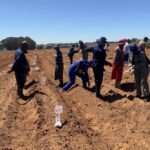
The reports also emphasize MFAN’s agroecological approach, transforming farming in Deelpan from vulnerable subsistence to a resilient, community-led system. Through training in crop rotation, composting, and water efficiency, farmers have improved productivity, strengthened soil health, and reduced costly input dependency. This locally rooted strategy has created what the reports call an “invisible infrastructure of solidarity”, reinforcing resilience to drought and climate shocks.

Looking ahead, the Feasibility Assessment Report outlines strategies to scale MFAN via value-added processing—including drying, milling, packaging, and poultry production—reducing post-harvest losses, creating stable year-round income, and opening access to formal markets.
MFAN integrates agriculture, cooperative enterprise, governance, and climate resilience into a tested, community-owned development model. Drawing lessons from successful social enterprises like Citrus Academy, HelloChoice, and INMED Aquaponics, MFAN demonstrates how integrated rural development delivers sustainable, scalable results.
The reports identify six principles for scaling MFAN: integrated development beyond farming, value-added processing, continuous training, community-led governance, blended financing, and climate-smart agriculture. These principles make MFAN a national model for rural transformation.
“MFAN proves that rural transformation is possible when development starts with people, not projects,” Pardesi added. Seriti Institute now looks to partner with government, donors, and the private sector to replicate this impact across South Africa.
Join 'Farmers Mag' WhatsApp Channel
Get the latest Farming news and tips delivered straight to your WhatsApp
CLICK HERE TO JOIN