

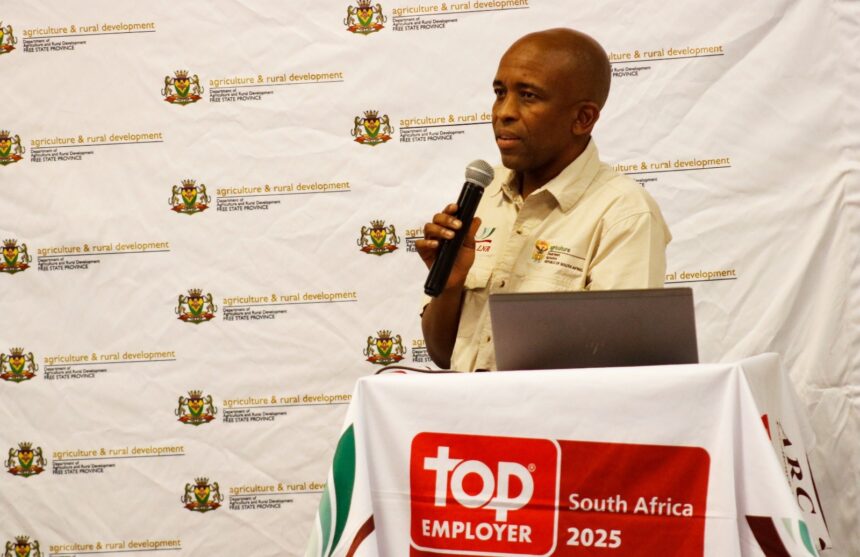
The Department of Forestry, Fisheries and the Environment (DFFE) has set the stage for South Africa’s 9th National Greenhouse Gas (GHG) Inventory, focusing on sustainable agricultural development and climate resilience. In partnership with the Department of Agriculture and the Agricultural Research Council (ARC), the DFFE hosted a stakeholder consultation workshop at Glen to drive national dialogue on reducing emissions in the agricultural sector.
The engagement brought together policymakers, researchers, and industry stakeholders to assess major sources of GHG emissions and identify practical low-carbon strategies that can inform the development of the National GHG Emission Reduction Plan (ERP) for agriculture.
The Intergovernmental Panel on Climate Change (IPCC) and global scientific consensus have long linked human activity to rising greenhouse gas levels, warning that unchecked emissions threaten global food systems and ecosystems. South Africa’s agricultural sector, like others worldwide, faces the dual challenge of producing more food while reducing its environmental footprint.
The workshop objectives were clear: to build a shared understanding of current emission trends, to involve stakeholders in developing evidence-based mitigation strategies, and to strengthen the country’s commitment to a low-carbon agricultural future.
Proceedings opened with plenary sessions led by representatives from the DFFE, Department of Agriculture, and ARC. These presentations outlined South Africa’s current emission profile, the role of agriculture in national GHG reporting, and opportunities for sustainable transformation.
Participants then divided into thematic breakaway sessions focused on livestock management, crop management, natural resource management, and renewable energy. Each group explored ways to identify emission sources, improve data accuracy, and develop practical interventions.
Key discussions centered on improving access to activity data, such as fertiliser usage and livestock numbers, which are essential for precise emission estimates. Stakeholders also shared best practices for emission reduction, including improved manure management, efficient irrigation systems, precision farming, renewable energy integration, and conservation agriculture.
The workshop reinforced the view that collaboration is vital for climate-smart agriculture. The insights gathered will guide the formulation of South Africa’s agricultural GHG ERP, positioning the sector to align with national climate commitments and global sustainability goals.
By engaging scientists, policymakers, and producers, the DFFE and its partners are charting a practical path toward a resilient, low-emission agricultural economy that supports both productivity and environmental protection.
Join 'Farmers Mag' WhatsApp Channel
Get the latest Farming news and tips delivered straight to your WhatsApp
CLICK HERE TO JOIN




