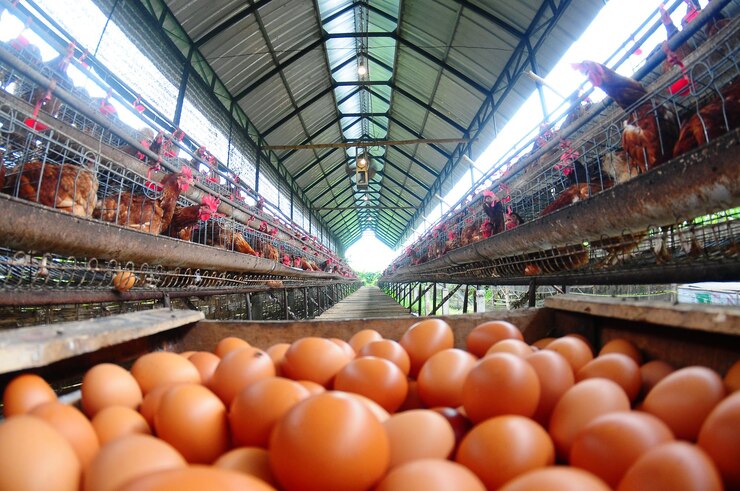
Increasing egg production requires attention to nutrition, environment, health, and management practices. Farmers who implement the right strategies can achieve higher laying rates and better flock performance.
Provide Balanced Nutrition
Laying hens need diets rich in protein, calcium, vitamins, and minerals. Feed with 16-18% protein supports egg formation. Calcium sources like limestone or crushed oyster shells strengthen eggshells. Ensure access to clean water, as even mild dehydration reduces laying. Regularly monitor feed quality and adjust diets according to the birds’ age and production stage.
Maintain Optimal Lighting
Light affects egg production. Hens need 14-16 hours of light per day to maintain peak laying. Natural light works, but in indoor facilities, use artificial lighting to supplement. Avoid sudden changes in light duration, as this can stress birds and lower production. Use timers to maintain consistent schedules.
Control Temperature and Ventilation
Temperature extremes reduce laying rates. Ideal house temperature is 20-24°C. Provide good ventilation to reduce heat stress and remove ammonia. Avoid drafts, as they can stress birds. Use fans, curtains, or shades to control the environment.
Practice Good Flock Health Management
Disease can drastically reduce egg output. Vaccinate against common poultry diseases and maintain biosecurity. Regularly check birds for signs of illness and separate sick birds promptly. Clean feeders, drinkers, and housing to prevent disease buildup. Parasite control, including regular deworming, supports consistent laying.
Provide Comfortable Housing
Adequate space reduces stress and encourages laying. Allow at least 0.2-0.3 m² per bird in cages or 1-1.5 m² per bird in free-range systems. Use well-designed nesting boxes to make laying easier. Comfortable perches and clean litter also improve productivity.
Monitor Egg Collection and Management
Collect eggs frequently to reduce breakage and stress. Keep records of daily production to identify drops in laying rates early. Adjust management practices based on production trends, including feed, lighting, or flock health interventions.
Reduce Stress Factors
Stress lowers egg production. Avoid sudden changes in feed, handling, or flock composition. Protect birds from predators and loud noises. Stress from overcrowding or poor handling directly reduces laying rates.
Improving egg production relies on proper nutrition, lighting, housing, health management, and stress reduction. Farmers who monitor their flocks, adjust management practices, and provide consistent care see higher egg yields and better-quality eggs.
Join 'Farmers Mag' WhatsApp Channel
Get the latest Farming news and tips delivered straight to your WhatsApp
CLICK HERE TO JOIN