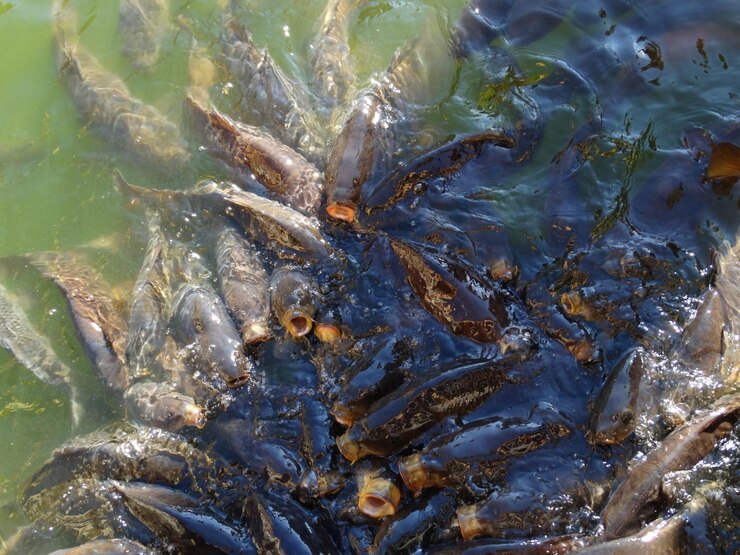
Small-scale fish farming is a practical way to supplement household food supplies and generate income. With proper planning, even limited land or water resources can support a productive pond system. Success depends on understanding fish biology, water management, feeding practices, and pond design. A well-managed pond ensures healthy fish, steady growth, and consistent harvests, making aquaculture a reliable addition to small-scale farming operations.
Site Selection
Choose a location with access to clean water and good drainage. Avoid areas prone to flooding or waterlogging. Ensure the site receives adequate sunlight, at least 6 hours per day, to support fish growth and maintain water quality.
Pond Design
Determine the pond size based on available land and production goals. Small-scale ponds typically range from 50 to 500 square meters. Design the pond with gentle slopes to facilitate harvesting and reduce erosion. Include an inlet and outlet for water management and ensure the pond depth ranges from 1 to 1.5 meters for optimal fish health.
Water Quality Management
Water quality is critical for fish survival. Maintain oxygen levels, pH between 6.5 and 8.5, and low ammonia concentrations. Regularly test water and perform partial water exchanges if needed. Avoid introducing chemicals that can harm fish or disrupt the pond ecosystem.
Stocking the Pond
Select fish species suited to your climate and market. Common options include tilapia, catfish, and carp. Stock at appropriate densities, typically 2-5 fish per square meter for small-scale systems, to prevent overcrowding and ensure steady growth. Acclimate fingerlings before releasing them into the pond.
Feeding and Nutrition
Provide a balanced diet to support rapid growth. Commercial fish feeds or homemade feed using maize, soybean, or fish meal can be used. Feed small quantities multiple times per day, adjusting amounts based on fish size and water temperature. Avoid overfeeding to prevent water pollution.
Pond Maintenance
Regularly remove weeds, dead plants, and debris. Check pond banks for erosion and repair as needed. Monitor fish health and watch for signs of disease. Maintain aeration through water circulation or simple aerators to ensure adequate oxygen levels.
Harvesting
Plan harvesting based on market demand and fish size. Partial harvesting allows smaller fish to continue growing while providing immediate income. Use nets or traps carefully to reduce stress and injury to the remaining fish.
Record Keeping
Track stocking dates, feed quantities, water quality, and growth rates. Records help identify problems early and improve management decisions over time.
Building and managing a small-scale fish pond system requires careful attention to site selection, pond design, water quality, and feeding practices. Consistent maintenance and monitoring help prevent disease, ensure fish health, and improve yields. Farmers who implement these strategies can achieve sustainable production, meet household protein needs, and generate income, making small-scale aquaculture a practical and rewarding venture.
Join 'Farmers Mag' WhatsApp Channel
Get the latest Farming news and tips delivered straight to your WhatsApp
CLICK HERE TO JOIN