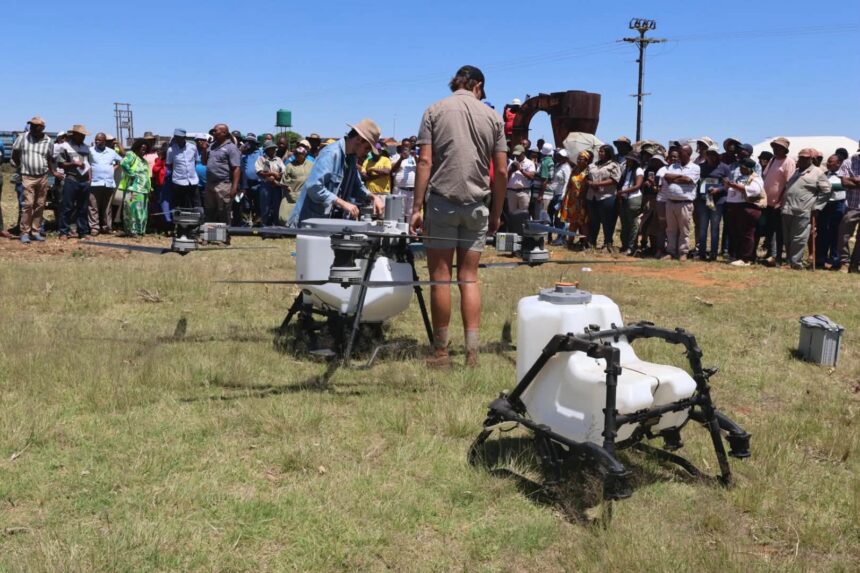
The North West Department of Agriculture and Rural Development is marking the planting season by celebrating agricultural achievements and encouraging farmers to prepare for the challenges and opportunities ahead. The initiative highlights the importance of practical farming knowledge, modern agricultural technologies and sustainable production methods in strengthening the province’s agricultural sector. Through demonstrations, farmer support and agricultural extension services, the Department aims to help farmers make informed decisions as they prepare their fields for planting. The launch also provided an opportunity to showcase techniques that can improve crop production, manage weeds and support the efficient use of farming resources. By promoting preparedness and knowledge-sharing, the Department continues to support farmers in building resilient agricultural operations and contributing to food security across the North West province.
The planting season is an important period for farmers because decisions made before and during planting can influence crop establishment, field management and eventual yields. Proper preparation involves understanding local weather conditions, assessing soil moisture, preparing land and ensuring that equipment is ready for use. Farmers must also consider the suitability of their crops, the timing of planting and the availability of essential inputs. These decisions become particularly important when rainfall patterns are unpredictable or temperatures vary significantly. By encouraging early planning and practical preparation, the Department seeks to help farmers reduce avoidable risks and improve their ability to respond to changing conditions throughout the growing season.
The launch celebrated agricultural achievements while placing a strong emphasis on practical skills that farmers can apply in their daily operations. Demonstrations on planter calibration and aerial herbicide application formed part of the activities, offering valuable insight into the role of precision and appropriate technology in modern farming. These techniques address different aspects of crop production, from ensuring accurate seed placement to managing weeds that compete with crops for water, nutrients, sunlight and space. Demonstrations can help farmers understand how equipment should be used and why correct application methods matter. They also create opportunities for farmers, agricultural professionals and extension officers to exchange knowledge and discuss ways to improve farming practices.
Planter calibration was one of the key techniques demonstrated during the launch. This process involves adjusting and checking a planter to ensure that it delivers the intended amount of seed at the correct spacing and planting depth. Accurate calibration helps farmers establish more uniform crop stands and avoid problems associated with excessive or insufficient seed placement. If a planter distributes seeds unevenly, crops may emerge inconsistently, making it harder to manage the field and use available resources efficiently. Regular equipment checks before planting can therefore help farmers reduce seed waste, improve planting accuracy and establish a stronger foundation for crop development.
Correct planter calibration also supports the efficient use of agricultural inputs. Seed is a significant production cost for many farmers, so using the appropriate planting rate can help prevent unnecessary expenditure. Consistent seed placement can improve crop establishment and make it easier to carry out subsequent operations, including fertiliser application, weed control and harvesting. However, the correct settings depend on factors such as the crop being planted, seed size, target plant population, soil conditions and the specifications of the equipment. Farmers should follow appropriate technical guidance and test their equipment before beginning large-scale planting to confirm that it performs as intended.
Aerial herbicide application was another important feature of the agricultural demonstrations. This technique uses aircraft or suitable unmanned aerial systems to apply herbicides over agricultural land, depending on the equipment, product and applicable regulations. Aerial application can be useful in certain farming situations because it allows operators to cover areas efficiently without driving machinery across the field. It may also help address weed management challenges where ground-based equipment is difficult to use. However, the effectiveness and suitability of aerial herbicide application depend on careful planning, appropriate equipment, weather conditions and compliance with product instructions and relevant legal requirements.
Responsible herbicide application is essential for protecting crops, people and the surrounding environment. Wind speed and direction, temperature, humidity and the risk of spray drift can affect where herbicide droplets travel after application. Poor application practices may cause chemicals to move beyond the intended treatment area, potentially damaging nearby crops or affecting sensitive vegetation. Farmers and operators must therefore select suitable application conditions, use equipment designed for the intended purpose and follow the approved label instructions for each product. Training and professional guidance are particularly important when using aerial application methods, as efficiency must be balanced with safety, accuracy and environmental protection.
The demonstrations also highlighted the broader role of precision agriculture in improving crop production. Precision farming focuses on using information, suitable machinery and accurate application methods to manage agricultural activities more effectively. Although the technologies available to individual farmers may differ, the underlying principle is to make informed decisions that match farming practices to specific field conditions. Accurate planting, appropriate weed management and efficient use of inputs can help reduce avoidable losses and support more consistent production. Practical demonstrations give farmers an opportunity to see how these principles work and consider which techniques are suitable for their own operations.
Climate-smart agriculture is another important part of preparing for the planting season in the North West province. Farmers face challenges associated with variable rainfall, high temperatures, soil moisture loss and other weather-related pressures that can affect crop growth. Climate-smart practices can include conserving soil moisture, maintaining soil health, adjusting planting dates where appropriate and selecting crops or varieties suited to local conditions. The most suitable approach depends on the location, farming system, available resources and expected weather conditions. By promoting knowledge-sharing and practical training, the Department encourages farmers to consider methods that support productivity while strengthening their ability to manage climate-related risks.
Agricultural extension services play a vital role in connecting farmers with technical knowledge and practical support. Extension officers can help farmers understand recommended production practices, identify challenges and make decisions based on their specific circumstances. Their work can include guidance on planting methods, equipment use, crop management, pest and weed control and sustainable farming techniques. These services are especially valuable when farmers need to adapt their practices to changing conditions or evaluate new agricultural technologies. Continued engagement between farmers and extension professionals can also help ensure that information shared during demonstrations translates into practical improvements in the field.
Knowledge-sharing is equally important for strengthening agricultural development across the province. Farmers operate under different conditions, and their experiences can provide useful lessons about what works in particular soils, climates and production systems. Practical demonstrations encourage discussion between farmers and agricultural specialists, allowing participants to raise questions and improve their understanding of technical methods. Sharing information about equipment calibration, herbicide application and crop management can help farmers make better use of available resources. When supported by reliable technical advice and ongoing extension services, these activities can contribute to more informed farming decisions and stronger agricultural practices.
Sustainable farming remains central to the long-term development of the agricultural sector. Farmers must balance the need to produce sufficient food with the responsible management of soil, water, seeds, chemicals and other resources. Efficient planting methods can reduce unnecessary input use, while appropriate weed control can help protect crops from competition and support productive land management. Climate-smart practices can further improve resilience by helping farmers respond to changing weather patterns and maintain the productive capacity of their land. These approaches are not identical for every farm, but careful planning and access to relevant agricultural knowledge can help farmers identify practical improvements suited to their circumstances.
Improving agricultural resilience also contributes to food security across the North West province. Reliable crop production supports food availability and can provide income and economic opportunities for farming households and other participants in the agricultural value chain. When farmers prepare adequately for the planting season, maintain their equipment and apply suitable production methods, they can improve their ability to manage common farming risks. Nevertheless, agricultural outcomes remain influenced by factors such as rainfall, input costs, market conditions and pest pressures. Ongoing support, access to appropriate technologies and timely agricultural information can help farmers respond to these challenges more effectively.
The Department’s planting season initiative therefore extends beyond celebrating achievements. It highlights the need to combine practical farming skills, modern technology, climate awareness and continued support for agricultural producers. Demonstrations on planter calibration and aerial herbicide application show how technical knowledge can help improve planting accuracy, manage weeds and promote efficient production. The emphasis on agricultural extension services and knowledge-sharing also recognises that farmers need ongoing guidance to apply these techniques correctly and sustainably. By encouraging preparedness and responsible farming practices, the North West Department of Agriculture and Rural Development is reinforcing the importance of a well-informed and resilient agricultural sector.
As the planting season progresses, farmers will need to remain attentive to local weather conditions, soil moisture, equipment performance and crop management requirements. Preparing carefully, seeking technical advice and using appropriate agricultural technologies can help them make better decisions throughout the growing cycle. The Department’s focus on practical demonstrations, climate-smart agriculture and farmer support provides a valuable framework for strengthening these efforts. Continued cooperation between farmers, extension officers and agricultural stakeholders will be important in turning knowledge into measurable improvements in farming operations. Through sustained preparation and responsible resource management, the province can strengthen agricultural resilience, support sustainable crop production and contribute to food security for communities across the North West.
Join 'Farmers Mag' WhatsApp Channel
Get the latest Farming news and tips delivered straight to your WhatsApp
CLICK HERE TO JOIN