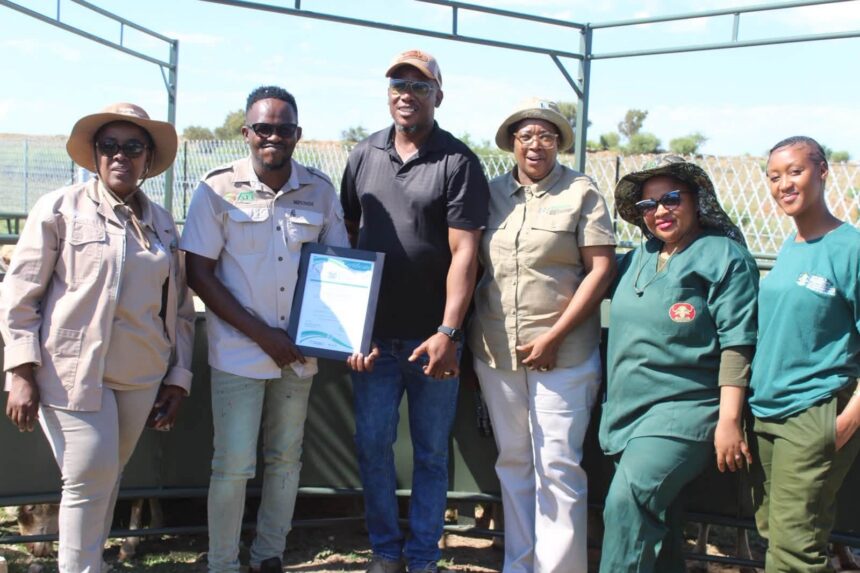
Farmers in the Dr Kenneth Kaunda District are set to benefit from improved livestock infrastructure and essential agricultural resources following a handover ceremony officiated by District Director Ms Priscilla Sentsho. The initiative aims to empower farmers, improve livestock management and strengthen agricultural development across local farming communities. Through the provision of livestock, handling facilities and water infrastructure, the intervention seeks to address some of the practical challenges that farmers face in maintaining healthy animals and managing their farming operations. AM Farming received sheep, rams and supporting infrastructure, while ten communal farmers from Rysmierbult received a cattle handling facility. These interventions reflect the department’s continued commitment to farmer empowerment, sustainable rural livelihoods and improved food security.
AM Farming received 100 sheep and three rams as part of the livestock support initiative. This livestock allocation provides the farm with resources to support sheep production and develop its farming activities. The addition of breeding rams can help establish or strengthen a flock’s breeding capacity, depending on the animals’ suitability, health and management. Sheep farming can contribute to household and business income through the production of animals for sale and other agricultural market opportunities. With appropriate feeding, veterinary care and breeding management, the livestock may help support the farm’s long-term production goals.
In addition to the livestock, AM Farming received a sheep handling facility designed to support the safe and efficient management of its flock. Handling facilities provide a controlled space where farmers can manage sheep during routine inspections, health treatments and other necessary procedures. Proper handling can reduce unnecessary stress on animals and make it easier for farmers to carry out essential livestock management tasks. The farm also received a weighing scale, which can help monitor animal growth, assess body condition and inform decisions about feeding and marketing. Access to these resources can improve record-keeping and help farmers make more informed decisions about flock performance.
The handover also included a dipper, which can support livestock health management when used with the appropriate approved treatment and according to veterinary guidance. Dipping equipment is commonly used to apply treatments against external parasites, although its effectiveness depends on correct use and suitable animal health practices. Regular parasite management can help protect livestock from conditions that affect their health, growth and productivity. Farmers must follow product instructions and seek appropriate veterinary advice to ensure treatments are safe and effective. Combined with the sheep handling facility and weighing scale, the equipment gives AM Farming additional resources to manage its flock more systematically.
Water access was another important part of the support provided to AM Farming. The farm received borehole equipping and water reticulation infrastructure to improve access to water for its agricultural activities. Reliable water supplies are essential for livestock production because animals need clean drinking water throughout the year, particularly during hot and dry conditions. Water infrastructure can also help reduce the time and effort required to provide water where suitable distribution points are available. The long-term value of this investment will depend on responsible water use, regular infrastructure maintenance and the sustainable management of the borehole.
Ten communal farmers from Rysmierbult also benefited from the initiative through the handover of a cattle handling facility. The facility is intended to improve livestock handling and management practices among the participating farmers. Cattle handling infrastructure provides a more controlled environment for activities such as health inspections, vaccination, weighing and other routine procedures when carried out by trained personnel. It can help farmers manage their animals more safely while reducing the risks associated with attempting to restrain cattle without suitable equipment. For communal farmers, access to shared infrastructure can also create opportunities to coordinate livestock management activities and make essential services easier to organise.
Improved livestock handling can contribute to better animal health, productivity and farm management. When farmers have access to suitable facilities, they can carry out routine procedures more efficiently and keep better track of the condition of their animals. This can help them identify potential health problems earlier and arrange appropriate veterinary assistance when necessary. Good livestock management also involves adequate nutrition, clean water, disease prevention and responsible breeding practices. The new facilities can support these activities, although the results will depend on how consistently farmers use and maintain the infrastructure.
The handover highlights the importance of investing in practical resources that address the everyday needs of livestock farmers. Animals alone are not enough to ensure successful livestock production, as farmers also require suitable facilities, reliable water supplies and equipment for managing their herds or flocks. The combination of sheep, breeding rams, handling equipment and water infrastructure provided to AM Farming addresses several of these operational needs. Meanwhile, the cattle handling facility in Rysmierbult gives ten communal farmers access to infrastructure intended to improve their livestock management practices. Together, these interventions support the broader goal of strengthening farming operations and creating better conditions for agricultural activity.
Livestock farming plays an important role in rural livelihoods by providing opportunities to generate income, produce food and build agricultural assets. Sheep and cattle can contribute to local food systems, while responsible livestock management can help farmers maintain productive herds and flocks over time. However, farmers must also manage costs, protect animals against disease and adapt their practices to local environmental conditions. Access to infrastructure can reduce some practical barriers, but sustained progress requires ongoing maintenance, sound farm management and appropriate technical support. The handover therefore represents an investment in resources that farmers can use as part of their wider efforts to improve productivity and strengthen their livelihoods.
The initiative also reinforces the importance of supporting communal farmers alongside established or developing farming operations. Communal farmers may face difficulties accessing specialised infrastructure individually, particularly when the costs are beyond the means of a single household. Providing a cattle handling facility can help address this challenge by creating a resource that participating farmers can use to support essential livestock management activities. Clear arrangements for access, maintenance and shared responsibility will be important to ensure that the facility remains useful over time. Cooperation among the farmers can help protect the investment and encourage more organised livestock management within the Rysmierbult community.
The livestock infrastructure and resource handover officiated by Dr Kenneth Kaunda District Director Ms Priscilla Sentsho marks a practical step towards supporting agricultural development in the district. AM Farming received 100 sheep, three rams, a sheep handling facility, a weighing scale, a dipper and borehole equipping with water reticulation infrastructure. Ten communal farmers from Rysmierbult also received a cattle handling facility to improve livestock management. These resources have the potential to strengthen animal care, improve farm operations and create opportunities for more sustainable livestock production when supported by responsible management. By continuing to invest in farmers and essential agricultural infrastructure, the department aims to strengthen rural livelihoods, support food production and contribute to long-term agricultural development across the district.
Join 'Farmers Mag' WhatsApp Channel
Get the latest Farming news and tips delivered straight to your WhatsApp
CLICK HERE TO JOIN