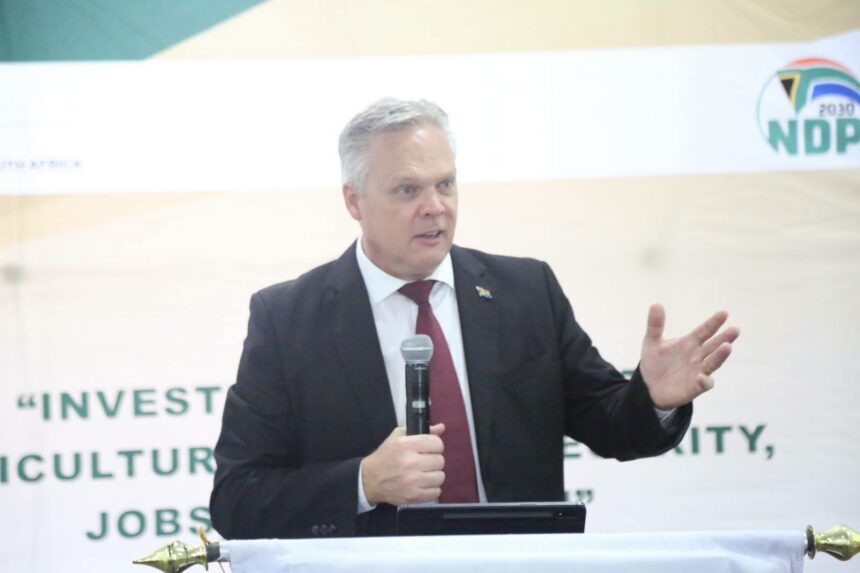
The National Department of Agriculture is holding its Quarterly Planning and Reporting Meeting (QPRM) in Benoni from 12 to 13 October 2026, bringing together senior management and leaders of its entities to assess performance, review progress and align priorities for the agricultural sector. The meeting provides an opportunity to examine the implementation of departmental programmes and identify areas where stronger coordination and improved service delivery are needed. Minister of Agriculture Willie Aucamp emphasised the importance of continued government support for farmers, highlighting their role in ensuring food security, sustaining livelihoods and contributing to economic growth. The discussions focus on ensuring that departmental plans translate into practical outcomes that benefit farmers and strengthen agricultural development. For South Africa’s farming community, the meeting highlights the importance of effective planning, accountable leadership and responsive government support.
The Quarterly Planning and Reporting Meeting brings together officials responsible for guiding the department’s work and representatives from its entities. These engagements provide a structured opportunity to review progress against planned activities, assess performance and discuss challenges affecting implementation. By examining departmental priorities collectively, senior leaders can identify areas that require greater attention and strengthen coordination across different programmes. Regular performance reviews also help management understand whether planned activities are progressing as intended and where corrective action may be necessary. This process is important for ensuring that public resources support clearly defined objectives and deliver meaningful benefits to the agricultural sector.
Minister Willie Aucamp’s emphasis on continued government support for farmers places agricultural producers at the centre of the discussions. Farmers play an essential role in producing food, supplying agricultural markets, creating employment and supporting economic activity in rural communities. Their operations also contribute to the wider agricultural value chain, which includes input suppliers, transport services, processors and retailers. However, farming businesses face a range of challenges, including changing weather conditions, production costs, market pressures and the need to maintain productivity. Continued engagement between government and the farming sector is important for identifying these challenges and considering practical ways to support agricultural production.
Food security remains a key priority for South Africa, making effective agricultural planning particularly important. A reliable food supply depends on productive farms, functioning distribution networks and the ability of households to access food. Government programmes can support these objectives by addressing relevant agricultural needs and improving the delivery of services to farmers. The quarterly meeting provides a platform to review the progress of departmental initiatives and consider whether implementation is meeting established objectives. Strong monitoring and clear accountability can help ensure that agricultural programmes remain focused on improving production, supporting livelihoods and strengthening the country’s food system.
The meeting also provides an opportunity to identify challenges that may delay the implementation of agricultural programmes. Even when plans are clearly defined, progress can be affected by operational constraints, resource limitations or coordination difficulties between institutions. Identifying these issues allows departmental leadership to consider appropriate responses and determine where changes in planning or implementation may be needed. Regular reporting can also help clarify responsibilities and improve communication between senior management and departmental entities. Addressing challenges early can improve the department’s ability to deliver services and respond to the needs of farmers.
Accountability is another important aspect of the Quarterly Planning and Reporting Meeting. Government departments are responsible for ensuring that their plans, budgets and programmes support their intended objectives. Reviewing performance helps leadership assess progress, identify gaps and determine whether available resources are being used effectively. It also creates an opportunity to strengthen oversight and improve decision-making across the department and its entities. For farmers, effective accountability matters because the success of agricultural support programmes depends not only on policy commitments but also on reliable implementation and accessible services.
Coordination between the National Department of Agriculture and its entities is also essential for achieving shared agricultural objectives. Different institutions may be responsible for distinct functions, but their work can influence the same farmers, communities and agricultural value chains. Regular engagements allow leaders to discuss priorities, improve alignment and identify opportunities for more coordinated action. This can help reduce duplication, clarify responsibilities and strengthen the implementation of programmes where cooperation is required. A more coordinated approach can support the department’s wider objective of building an inclusive and sustainable agricultural sector.
The discussions in Benoni also reinforce the importance of making agricultural development inclusive. South Africa’s farming sector includes commercial producers, smallholder farmers and subsistence farmers with different resources and support requirements. Effective agricultural planning needs to recognise these differences and consider how departmental programmes can respond to the needs of farmers across the sector. Improving access to relevant services and ensuring that support reaches intended beneficiaries can help create opportunities for broader participation in agriculture. Such efforts are important for strengthening rural livelihoods, supporting emerging producers and maintaining the contribution of agriculture to economic growth.
The two-day meeting, taking place from 12 to 13 October 2026, reflects the department’s focus on performance monitoring, strategic alignment and improved service delivery. Its value will depend on how the discussions inform decisions, address implementation challenges and guide the department’s work beyond the meeting itself. Clear priorities, measurable progress and regular follow-up can help turn planning discussions into practical improvements for farmers. Continued engagement with agricultural stakeholders will also be important in ensuring that departmental initiatives respond to the realities of farming and food production. These efforts can help strengthen public confidence in agricultural programmes while supporting better coordination across the sector.
The National Department of Agriculture’s Quarterly Planning and Reporting Meeting in Benoni highlights the connection between effective governance and meaningful support for South African farmers. Through performance reviews, strategic discussions and engagement between senior management and departmental entities, the meeting provides a platform to strengthen accountability and improve programme implementation. Minister Willie Aucamp’s message reinforces the importance of farmers to food security, rural livelihoods and economic development. The next step is to ensure that the priorities discussed lead to effective action and measurable improvements in agricultural service delivery. By maintaining a focus on accountability, collaboration and practical results, the department can continue working towards a dynamic, inclusive and sustainable agricultural sector that supports farmers and contributes to South Africa’s long-term food security.
Join 'Farmers Mag' WhatsApp Channel
Get the latest Farming news and tips delivered straight to your WhatsApp
CLICK HERE TO JOIN