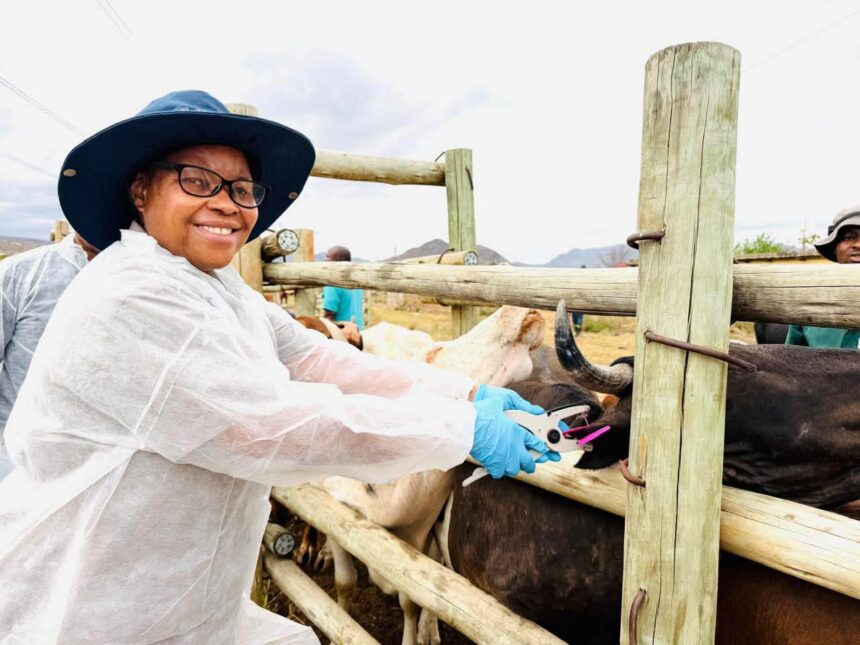
The Limpopo Department of Agriculture and Rural Development (LDARD) has taken agricultural services directly to the community of Ga-Manyaka Village in the Fetakgomo Tubatse Local Municipality as part of Day 4 of the Sekhukhune District Development Model (DDM) Service Delivery Week. The initiative placed livestock health and community livelihoods at the centre of government’s service delivery efforts. Limpopo MEC for Agriculture and Rural Development Ms Nakedi Grace Kekana joined officials on the ground and personally led State Veterinarians and Animal Health Technicians during a large-scale livestock vaccination drive. The intervention focused on vaccinating cattle and goats against critical diseases that can threaten animal health, agricultural production and household income. By taking veterinary services directly to rural livestock owners, LDARD is demonstrating the practical impact of government working alongside communities.
The livestock vaccination campaign forms part of a broader effort to strengthen animal health across rural communities in Limpopo. Cattle and goats provide an important source of food, income and economic security for many livestock-owning households. Disease outbreaks can reduce herd numbers, affect productivity and create significant financial losses for farmers who depend on their animals. Regular vaccination therefore plays an important role in preventing the spread of livestock diseases and protecting agricultural assets. By bringing professional veterinary services closer to farmers, the department can help communities respond to animal health risks before they develop into larger threats.
MEC Nakedi Grace Kekana was joined by LDARD Head of Department Ms Mpho Mashamba as they worked alongside technical teams during the vaccination activities. Their presence highlighted the importance that the provincial government places on practical agricultural service delivery and direct engagement with farming communities. State Veterinarians and Animal Health Technicians provided the technical expertise required to carry out the vaccination programme safely and effectively. Their work also creates an opportunity for livestock owners to interact with agricultural officials and receive guidance about protecting the health of their animals. Direct engagement between government officials and communities can help strengthen trust and improve awareness of available agricultural services.
The vaccination of cattle and goats is particularly important because livestock diseases can have consequences beyond individual farms. Some diseases can spread rapidly between animals, creating risks for neighbouring farmers and the wider livestock sector. Preventive vaccination can reduce these risks and support healthier herds when farmers follow veterinary guidance and other recommended animal health measures. Healthy livestock are also important for food security because productive animals can contribute to household consumption and income generation. Protecting animal health therefore supports both individual livestock owners and the resilience of rural agricultural communities.
The Day 4 intervention formed part of the Sekhukhune District Development Model Service Delivery Week, which is designed to bring government services closer to residents. The District Development Model promotes coordination between different spheres of government and aims to ensure that development initiatives respond to local needs. Agriculture plays an important role within this approach because rural communities often depend on farming and livestock activities for their livelihoods. Taking veterinary services into villages provides a practical example of how government programmes can address specific community needs on the ground. The Ga-Manyaka vaccination drive demonstrates how service delivery can move beyond government offices and reach people directly where agricultural activities take place.
For livestock owners in Ga-Manyaka Village, access to veterinary services can make a significant difference to the management of their herds. Rural farmers may face challenges accessing technical expertise, particularly when services are concentrated far from their communities. Bringing State Veterinarians and Animal Health Technicians directly to livestock-owning areas reduces some of these barriers and makes preventative animal health measures more accessible. It also provides officials with an opportunity to identify potential animal health concerns and educate farmers about disease prevention. This combination of practical intervention and community education can strengthen long-term livestock management.
The involvement of the provincial leadership also sends a message about the importance of agriculture within Limpopo’s development priorities. MEC Kekana’s participation in the vaccination campaign demonstrates a hands-on approach to understanding and responding to challenges facing farmers. Her engagement with technical teams and communities allows provincial leadership to see the realities of agricultural service delivery directly. Ms Mashamba’s participation further reinforces the department’s focus on coordinated implementation. When political leadership, departmental management and technical officials work together in the field, agricultural programmes can maintain a clear connection between policy objectives and community needs.
Livestock vaccination also contributes to food security by helping farmers protect animals that form part of local food production systems. Disease can undermine food availability by reducing the number of healthy animals available for household use or commercial purposes. Preventive animal health programmes can help farmers maintain stronger herds and reduce avoidable losses. This is particularly relevant in rural communities where livestock can play multiple roles, including providing food, generating income and serving as productive assets. Supporting healthy livestock therefore contributes to the broader goal of building resilient local food systems.
The economic importance of livestock also makes animal health a key part of rural development. Farmers who maintain healthy cattle and goats are better positioned to participate in local agricultural markets and generate income from their animals. Livestock sales can support household expenses and contribute to economic activity within rural communities. Preventing disease helps protect the value of these agricultural assets and reduces the risk of losses that can undermine household livelihoods. Government veterinary interventions can therefore have both an immediate animal health benefit and a wider economic impact.
The vaccination drive also demonstrates the value of preventative agricultural services. Responding to disease only after an outbreak occurs can be more difficult and costly than taking measures to reduce the risk in advance. Vaccination programmes give livestock owners an important tool for protecting their animals while supporting broader disease control efforts. However, vaccination works best when combined with responsible livestock management, appropriate movement controls and ongoing veterinary monitoring. Continued cooperation between farmers and veterinary authorities will therefore remain essential to maintaining healthy livestock populations across Limpopo.
Day 4 of the DDM Service Delivery Week also highlights the importance of ensuring that rural communities are not excluded from essential government services. The statement that government is leaving no one and no place behind is reflected in the decision to take agricultural support directly to Ga-Manyaka Village. Rural development requires sustained attention to communities where agriculture remains an important source of livelihoods. Access to veterinary services, agricultural advice and other forms of technical support can strengthen the ability of farmers to remain productive and respond to challenges. Bringing these services closer to communities can also help ensure that government programmes have a tangible impact at local level.
The work carried out by LDARD in Ga-Manyaka demonstrates how agricultural interventions can contribute to several development priorities at the same time. Livestock vaccination protects animals, supports farmers, strengthens food security and helps protect rural economic activity. The involvement of State Veterinarians and Animal Health Technicians ensures that the intervention is guided by appropriate technical expertise. Leadership from MEC Nakedi Grace Kekana and HOD Ms Mpho Mashamba reinforces the importance of coordinated service delivery. Together, these efforts demonstrate how targeted agricultural services can support more resilient rural communities.
The focus on Sekhukhune District is also significant because strengthening rural agriculture requires consistent engagement rather than isolated interventions. Farmers need access to services and information over time to manage animal health risks effectively. Regular interaction with veterinary teams can help improve compliance with vaccination programmes and encourage farmers to report suspected disease incidents promptly. Strong communication between communities and agricultural authorities can also improve the department’s ability to respond to emerging risks. Sustained service delivery can therefore build on the momentum created during initiatives such as DDM Service Delivery Week.
The livestock vaccination drive at Ga-Manyaka Village provides a clear example of government bringing essential agricultural services directly to the people who need them. MEC Nakedi Grace Kekana, HOD Ms Mpho Mashamba and the LDARD technical teams have placed animal health, food security and rural livelihoods at the centre of Day 4 of the Sekhukhune District Development Model Service Delivery Week. By vaccinating cattle and goats and engaging directly with livestock owners, the department is helping communities protect valuable agricultural assets while strengthening disease prevention. The initiative also demonstrates the importance of collaboration between political leadership, departmental officials, veterinary professionals and rural farmers. Continued investment in practical agricultural services will remain essential to building a resilient, food-secure and economically active Limpopo where rural communities can participate fully in the province’s development.
Join 'Farmers Mag' WhatsApp Channel
Get the latest Farming news and tips delivered straight to your WhatsApp
CLICK HERE TO JOIN