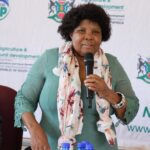
The KwaZulu-Natal Department of Agriculture and Rural Development has unveiled an ambitious roadmap for the province’s agricultural future through its 2026/2027 Budget Vote, presented by MEC for Agriculture and Rural Development Honourable Mrs TP Kamadlopha-Mthethwa. With agriculture identified as a key driver of economic growth, rural development and food security, the department has committed R2.818 billion towards strengthening agricultural production, improving livestock health, creating employment and empowering emerging farmers. The budget responds to both local and global challenges, including climate change, disease outbreaks and growing food demand, while placing agriculture at the centre of KwaZulu-Natal’s economic renewal. Guided by Premier Thamsanqa Ntuli’s vision of agriculture as a catalyst for inclusive growth, the department aims to create sustainable livelihoods, modernise farming systems and build resilient rural communities. Through investments in infrastructure, education, veterinary services, mechanisation and market access, the province is positioning itself to become one of South Africa’s leading agricultural economies.
One of the most pressing challenges facing the agricultural sector remains the outbreak of Foot-and-Mouth Disease (FMD), which has affected livestock production across South Africa. The province experienced significant difficulties after vaccine supplies from Botswana became unavailable, forcing the national government to source vaccines from Argentina and Türkiye. Despite these setbacks, KwaZulu-Natal has made remarkable progress since vaccinations began in late February 2026. More than 1.5 million cattle have already been vaccinated from the province’s estimated herd of 2.5 million animals. Vaccination campaigns have successfully covered seven districts, including uGu, Harry Gwala, uMkhanyakude, Zululand, uMgungundlovu, eThekwini and uThukela, with King Cetshwayo, iLembe, Amajuba and uMzinyathi scheduled to complete the first phase. The province aims to vaccinate at least 80 percent of its cattle population within six months to rebuild herd immunity and restore confidence in the livestock industry.
Veterinary services continue to receive significant financial support as part of the province’s disease prevention strategy. Currently, 2,286 dip tanks across KwaZulu-Natal are supplied with acaricides to control external parasites that affect livestock health and productivity. During the previous financial year, the department spent R60 million on parasite control remedies, benefiting more than 105,000 registered dip tank members. An additional R10 million was invested in primary animal healthcare through medicines, vaccines and disinfectants, while R8.6 million funded modern veterinary laboratory equipment to strengthen disease diagnosis and surveillance. For the current financial year, R47 million has been allocated for parasite control remedies, R13 million for veterinary medicines and vaccines and another R8.6 million for laboratory equipment and maintenance. The department has also strengthened capacity by appointing 60 Animal Health Technicians through the Expanded Public Works Programme and 77 Dip Tank Assistants to support vaccination and disease control programmes.
Beyond disease control, the department is making major investments in strengthening institutional capacity and improving public service delivery. Human resource planning remains aligned with the government’s objective of building a capable, ethical and developmental state. During the previous financial year, 82 permanent posts were filled, including four senior management positions, while 75 Assistant Agricultural Practitioners were appointed to strengthen extension services. For the 2026/2027 financial year, R87 million has been allocated to fill 292 priority vacancies across the department. Human capital development also remains a priority, with R29.3 million set aside for bursaries, internships, learnerships and staff development programmes. These investments are intended to ensure that the department has the skilled workforce needed to support farmers and deliver quality agricultural services throughout the province.
Education and skills development form a cornerstone of the department’s long-term agricultural strategy. External bursaries worth R4 million will support students pursuing scarce and critical qualifications such as Veterinary Science, Agricultural Engineering, Veterinary Technology and Industrial Engineering. Internal bursaries valued at R1.9 million will further support staff development within the department. In addition, R8.6 million has been allocated to support 92 graduate interns who commenced their two-year internships in June 2026. The department is also investing R6.9 million to continue supporting 120 learners enrolled in Plant and Animal Production learnerships at National Qualifications Framework Levels Two and Three. These programmes are designed to equip young people with practical agricultural skills while improving their employability within the sector.
Agricultural education institutions continue to benefit from substantial investment aimed at producing the next generation of agricultural professionals. Cedara College has completed a R52 million residence renovation project, allowing it to accommodate more students while introducing new skills programmes accredited by the Quality Council for Trades and Occupations. The college is also expanding partnerships with industry and alumni to strengthen practical training opportunities, including a technologically advanced barley feed system that will provide students with valuable workplace experience and scholarships. Owen Sithole College of Agriculture continues upgrading its infrastructure through improvements to electrical systems, water supply, sewer services and information technology. The college also offers extensive Work Integrated Learning opportunities that allow students to gain practical experience with agricultural enterprises throughout KwaZulu-Natal. During the 2026/2027 financial year, both colleges will continue strengthening accreditation, industry partnerships and student support services.
International skills development has also become an important component of the department’s strategy. Eleven students selected from districts across KwaZulu-Natal will participate in the Denmark Agricultural Internship Programme. This initiative provides young agricultural professionals with the opportunity to learn advanced farming techniques and management systems from one of the world’s leading agricultural countries. Upon returning home, participants are expected to apply international best practices to strengthen agricultural productivity and innovation within the province. The programme demonstrates the department’s commitment to preparing future agricultural leaders capable of competing in an increasingly globalised agricultural economy.
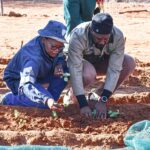
Supporting emerging farmers remains one of the department’s highest priorities. During the 2025/2026 financial year, the department provided assistance to 19,018 subsistence producers, 561 smallholder farmers and 10 commercial producers. Eleven new boreholes were drilled across several districts at a cost exceeding R3.5 million to improve water availability for farming communities experiencing drought conditions. One notable beneficiary, Mr Mondli Shangase from uMbumbulu, received a tractor, ten tunnels and farming implements after investing in his own borehole. His farming enterprise has since created employment for ten local people, with plans to employ an additional forty workers as the project expands. Following a departmental visit, officials were instructed to explore repurposing unused schools as agricultural facilities, using classrooms for storage, workshops and training while converting surrounding land into productive farms.
Mechanisation continues to play a critical role in increasing agricultural productivity across KwaZulu-Natal. During the previous financial year, the department procured 24 tractors to strengthen mechanisation services available to farmers. An additional 33 tractors have been acquired during the 2026/2027 financial year, bringing the total fleet expansion to 57 tractors over two years. The department has also allocated approximately R10 million to outsource mechanisation services through private service providers, ensuring more farmers receive timely land preparation support. A further R5.3 million will fund agricultural implements that complement the tractor fleet. These investments support the province’s Multi-Planting Season Programme, which exceeded expectations by planting 7,825 hectares for food production against a target of 4,282 hectares.
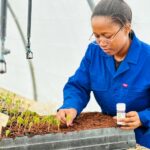
Scientific farming practices remain central to the department’s strategy for improving productivity. Extensive soil sampling will be undertaken before the 2026/2027 planting season to provide accurate recommendations on fertiliser application, lime requirements and crop suitability. Modern analytical laboratory equipment, including High Performance Liquid Chromatography, Atomic Absorption Spectroscopy, Flow Injection Analysis and Carbon Nitrogen Sulphur analysis instruments, has significantly improved laboratory capacity. During the previous financial year, R13 million was invested in laboratory equipment, while a further R14 million has been allocated for the current financial year. Accurate soil analysis enables farmers to make informed decisions that improve crop yields, reduce unnecessary input costs and promote sustainable land management.
Environmental sustainability remains another important focus through the LandCare Programme. During the previous financial year, the department exceeded all three of its major LandCare performance targets by rehabilitating 4,043 hectares of degraded agricultural land. Conservation agriculture practices were implemented across 813.4 hectares, surpassing the original target while improving soil health, water efficiency and climate resilience. Through the Expanded Public Works Programme, 475 green jobs were created, providing employment while supporting environmental conservation. These initiatives strengthen long-term agricultural sustainability by protecting natural resources and improving the productive capacity of farmland.
The department continues strengthening extension and advisory services to improve support for farming communities. One hundred operational vehicles were procured during the previous financial year to improve mobility and enable extension officers to reach farmers in remote rural areas more efficiently. Sixty Assistant Agricultural Practitioners have also been deployed across the province to strengthen technical support and advisory services. The Provincial Extension and Advisory Services Summit, held at the Durban International Convention Centre, brought together government officials, academics and industry experts to identify innovative approaches for modernising extension services. These initiatives strengthen the department’s ability to transfer knowledge and technology directly to farmers.
Support for women, youth and persons with disabilities remains firmly embedded within the department’s agricultural transformation strategy. During the previous financial year, assistance was provided to 193 female farmer projects, 121 youth-owned farming enterprises and 17 projects operated by persons with disabilities. For the current financial year, support will continue through 149 women-led projects, 63 youth enterprises and 32 projects owned by persons with disabilities. The department expects these interventions to create at least 114 agricultural jobs while expanding participation in the agricultural economy. Recognising that agriculture offers significant entrepreneurial opportunities, the department has designated 2026 as the Year of Youth in Agriculture.
Youth development programmes extend beyond traditional farming support. During the previous financial year, R6 million was invested in 12 agricultural enterprises owned by unemployed agricultural graduates. These businesses received fencing, boreholes, broiler houses, production inputs, feed and other infrastructure to establish commercially viable farming operations. Building on this success, the department plans to invest R7 million in supporting 14 additional youth-owned agribusinesses during the current financial year. The Goat Production Development Programme has also benefited 181 farmers through the distribution of 167 breeding goat units worth R9.145 million, with the majority of beneficiaries being women, young people and persons with disabilities.
Seed production and food security initiatives continue expanding across the province. More than 100 hectares of maize, dry beans and potatoes were planted under the department’s seed multiplication programme, producing 62,000 kilograms of maize seed, 8,100 kilograms of dry bean seed and 13,750 kilograms of potato seed for distribution. The Makhathini nursery supplied over eight million vegetable seedlings and sweet potato vines to vulnerable households. Plans are underway to establish additional vegetable seedling production in the uGu District while constructing a dedicated seed cleaning facility to reduce outsourcing costs and expand local seed production capacity.
The department is also supporting the growth of new agricultural industries. Approximately 700 hemp permits have already been issued to farmers across KwaZulu-Natal, while more than 200 producers and local coordinators have received specialised hemp production training. The department continues evaluating hemp cultivars in partnership with the Agricultural Research Council and the National Department of Agriculture while exploring opportunities for local seed multiplication. At the same time, the Indigenous Chicks Programme based at Owen Sithole College of Agriculture is expanding production capacity with the goal of distributing 45,000 indigenous chicks across the province to strengthen household food security.
The rehabilitation of dairy infrastructure at Cedara and Dundee represents another important investment aimed at modernising agricultural production. Upgraded dairy facilities will improve animal welfare, milk quality, production efficiency and training opportunities for future dairy farmers. The department has specifically encouraged young people from historically disadvantaged communities to enter the dairy industry, promising continued support through skills development and technical assistance. These investments strengthen the province’s dairy value chain while creating opportunities for emerging producers.
Climate resilience remains central to future agricultural planning. The department has developed digital reporting tools that allow farmers and extension officers to record climate-related incidents more effectively. These tools improve disaster monitoring while supporting evidence-based responses to climate challenges. Conservation agriculture programmes continue promoting farming practices that reduce soil degradation, improve moisture retention and enhance resilience to changing weather conditions. Together with improved irrigation infrastructure and scientific soil management, these interventions prepare farmers to adapt to increasingly unpredictable climatic conditions.
Market access remains one of the department’s strongest priorities. During the previous financial year, approximately 240 farmers received assistance to access both public and private sector markets, generating around R3.8 million in revenue through the sale of maize, sugar beans, soya beans, vegetables and eggs. The department aims to increase participating farmers’ income by 30 percent during the current financial year while creating around 50 additional jobs through post-harvest activities such as grading, sorting and packaging. Through the Radical Agrarian Socio-Economic Transformation Programme, approximately 250 commodity cooperatives and individual farmers will receive additional market support, with projected revenue growth of 40 percent.
The Agribusiness Development Agency continues supporting strategic agricultural development projects across the province. Significant progress has been made in rehabilitating the Makhathini Irrigation Scheme through infrastructure upgrades, installation of 32 kilometres of subsurface drainage and commissioning of 23 new pump stations to improve water security. The agency also continues supporting restructuring efforts involving the Ntingwe Tea Estate, KwaZulu-Natal Farming Enterprise and other strategic agricultural assets to improve operational efficiency and long-term sustainability.
Infrastructure development forms another key component of the province’s agricultural transformation agenda. Construction of the Richards Bay Fresh Produce Agri-Hub is expected to commence immediately following final municipal approval. Long-lead construction materials valued at R42 million have already been procured, and the project is expected to create approximately 500 jobs before completion in September next year. The Bhambanana Red Meat Abattoir in Jozini has also reached 70 percent completion after years of delays. Once operational, the facility will process up to 60 cattle per day, reducing transport costs for livestock farmers while improving market access and stimulating local economic development.
Women entrepreneurs continue receiving recognition through the annual Phezu’Komkhono Awards, which celebrate excellence in agriculture across various categories. During the latest awards ceremony, 25 women, including a senior citizen and a woman with a disability, shared R1.4 million in prize money to strengthen their farming enterprises. The department has allocated R1.6 million for the next awards programme while continuing to mentor previous winners to ensure long-term business growth. The Unemployed Agricultural Graduates Youth Programme has also placed 130 graduates on farms across KwaZulu-Natal, providing two years of practical workplace experience that prepares them for careers within the agricultural sector.
The Department of Agriculture and Rural Development concluded the budget by reaffirming that agriculture remains central to KwaZulu-Natal’s economic future. The total allocation of R2.818 billion includes R791.586 million for Administration, R1.983 billion for Agricultural Development and R42.717 million for Rural Development. These investments reflect a comprehensive strategy that combines education, infrastructure, research, veterinary services, enterprise development and environmental sustainability. By supporting farmers at every stage of the agricultural value chain, the department aims to create a resilient, competitive and inclusive agricultural economy capable of generating employment, improving food security and driving long-term rural development. The 2026/2027 Budget Vote demonstrates that KwaZulu-Natal is investing not only in farming, but also in the people, institutions and innovation needed to secure the future of agriculture for generations to come.
Join 'Farmers Mag' WhatsApp Channel
Get the latest Farming news and tips delivered straight to your WhatsApp
CLICK HERE TO JOIN