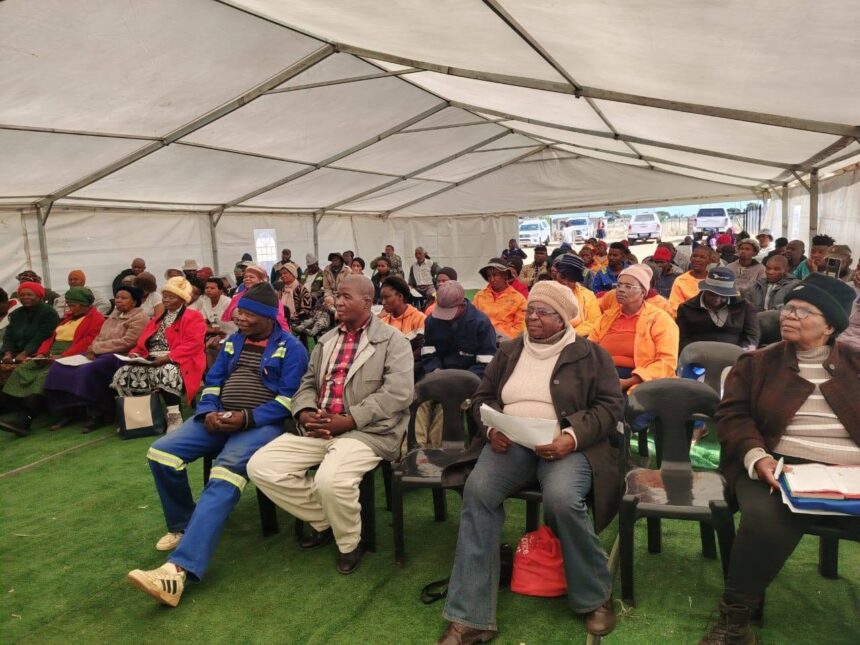
Food security and sustainable agriculture continue to be top priorities in South Africa’s rural development agenda, especially in regions where communities depend heavily on small scale farming for survival. In Maseoahatse within the Taolo Gaetsewe District Municipality in the Northern Cape, a recent Farmer Capacity Building Workshop and Traditional Seed and Food Fair brought together farmers, government officials and agricultural stakeholders. The initiative was led by the National Department of Agriculture together with the Northern Cape Provincial Department of Agriculture, Environmental Affairs, Rural Development and Land Reform. The gathering focused on improving farming knowledge while promoting the use of indigenous seeds that have supported rural communities for generations. It also highlighted the importance of strengthening local food systems in the face of climate change and rising input costs. The event created a practical space where knowledge, tradition and modern agricultural support systems could come together.
Farmers from across the Maseoahatse community played a central role in the event by showcasing a wide variety of traditional seeds used in backyard and small scale farming systems. These seeds included drought resistant crops that have been preserved and passed down through generations. Their exhibition demonstrated how indigenous seed varieties continue to play a vital role in household food production, especially in areas with limited access to commercial farming inputs. Many of the farmers explained how these seeds perform better in local soil and climate conditions compared to some modern hybrid alternatives. The display also reinforced the cultural importance of seed preservation, as many of these crops are tied to traditional diets and farming practices. Through their participation, farmers showed that indigenous knowledge remains a valuable asset in building resilient agricultural systems.
The involvement of the National Department of Agriculture and the Northern Cape Provincial Department of Agriculture, Environmental Affairs, Rural Development and Land Reform highlighted the government’s commitment to supporting grassroots agricultural development. Officials engaged directly with farmers, sharing information on best practices for seed preservation, soil management and sustainable production methods. They also provided guidance on how farmers can improve yields while maintaining biodiversity in their farming systems. The workshop created opportunities for dialogue between policymakers and rural farmers, allowing both groups to exchange knowledge and identify practical challenges on the ground. This engagement helped bridge the gap between formal agricultural support structures and community based farming systems. It also strengthened trust between farmers and government institutions responsible for agricultural development.
A key focus of the workshop was the role of community seed banks in improving food security and protecting indigenous crops. These seed banks allow farmers to store, share and preserve traditional seeds, ensuring that valuable genetic resources are not lost over time. Officials explained how seed banks can reduce dependency on commercial seed suppliers and lower production costs for small scale farmers. They also highlighted how these systems support climate resilience by ensuring access to crop varieties that are adapted to local environmental conditions. Farmers were encouraged to actively participate in seed saving practices and to contribute to the expansion of community led seed storage initiatives. This approach supports long term sustainability while strengthening household food production capacity.
Another important outcome of the event was the emphasis on improving access to quality seeds while preserving traditional varieties. Many farmers rely on a combination of indigenous and improved seed types to maximize productivity and reduce risk. Government representatives outlined programmes aimed at supporting farmers with certified seeds, training and technical assistance. At the same time, they stressed the importance of maintaining indigenous seed diversity as a safeguard against changing weather patterns and market pressures. This balanced approach ensures that farmers can benefit from modern agricultural advancements without losing valuable traditional knowledge. It also supports a more inclusive agricultural system that respects both innovation and heritage.
The Farmer Capacity Building Workshop and Traditional Seed Fair in Maseoahatse demonstrated how collaboration between government and rural communities can strengthen food systems at local level. By showcasing indigenous seeds and promoting knowledge sharing, the event reinforced the importance of community driven agriculture in achieving food security. It also showed that sustainable farming depends not only on technology and inputs but also on preserving cultural practices and local biodiversity. Farmers left the event with practical knowledge that can improve productivity while protecting traditional farming systems. As support from agricultural departments continues, initiatives like this will play a key role in building resilient rural livelihoods and ensuring that communities remain self sufficient in food production.
Join 'Farmers Mag' WhatsApp Channel
Get the latest Farming news and tips delivered straight to your WhatsApp
CLICK HERE TO JOIN