

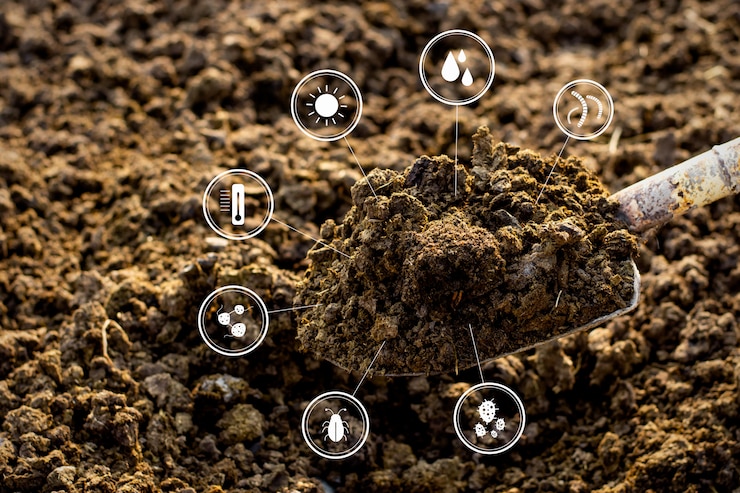
As climate change intensifies and drought conditions become more frequent, farmers and gardeners alike are turning to soil health as a powerful defense strategy. Among the most effective ways to improve soil health is by building soil organic matter—a natural resource that enhances moisture retention, improves fertility, and boosts drought resilience.
Investing in soil organic matter isn’t just a sustainable farming practice—it’s a critical step toward long-term climate adaptation.
What is Soil Organic Matter?
Soil organic matter (SOM) is made up of decomposed plant and animal material, living soil organisms, and humus—the stable end product of organic decay. While it may make up only a small fraction of the soil by volume, it has an outsized impact on the land’s productivity and resilience.
Organic matter:
- Improves soil structure, allowing better water infiltration and aeration.
- Increases the soil’s water-holding capacity, helping plants survive during dry spells.
- Enhances nutrient availability by slowly releasing essential minerals.
- Supports beneficial microbial activity, which boosts soil biodiversity and nutrient cycling.
Why Soil Organic Matter Matters During Drought
During drought conditions, soils low in organic matter quickly lose moisture, become compacted, and struggle to support crop growth. By contrast, organic-rich soils retain up to 90% more water and provide a buffer against extreme heat and water scarcity.
Soils with higher organic matter are also less prone to erosion, better at storing carbon, and more resilient to climate-related shocks. This makes building SOM a frontline strategy for farmers facing uncertain rainfall patterns and rising temperatures.
Proven Strategies to Build Soil Organic Matter
- Apply Compost Regularly
Compost is one of the most effective and accessible ways to add organic material to your soil. High-quality compost introduces stable carbon, beneficial microbes, and a range of nutrients. - Incorporate Cover Crops
Legumes, clover, rye, and other cover crops not only prevent erosion but also contribute organic material when they decompose. Their root systems improve soil structure and help retain moisture. - Practice Conservation Tillage
Minimizing soil disturbance helps preserve organic matter and microbial life. Reduced tillage or no-till farming protects soil aggregates and reduces carbon loss. - Rotate Crops
Crop rotation breaks pest cycles and introduces different root structures, which improve soil structure and organic matter content. - Use Organic Mulches
Applying straw, wood chips, or grass clippings helps reduce surface evaporation, suppress weeds, and slowly contribute organic material as the mulch decomposes. - Manage Livestock Wisely
Integrating livestock through managed grazing systems can return nutrients to the soil and promote root growth through plant defoliation cycles. - Biochar and Green Manure
Biochar—charcoal made from organic materials—can be added to soil to improve carbon content and microbial life. Green manure (freshly grown crops plowed into the soil) is another powerful tool to enrich organic matter.
Measuring Progress
Farmers should regularly test their soil for organic matter levels. Even small increases in SOM (e.g., from 1% to 2%) can result in significant gains in water retention and crop performance. Soil tests also help inform fertilizer decisions, reducing input costs and environmental impact.
Drought-Proofing Agriculture Through Soil Health
Building soil organic matter is a low-cost, high-impact strategy to prepare for drought. It reduces dependency on irrigation, supports ecosystem health, and increases yields under stress. With global weather patterns growing more unpredictable, improving soil resilience isn’t just good practice—it’s essential for the future of agriculture.
By nurturing the life within the soil, farmers invest in a system that works with nature, not against it. Building soil organic matter is not only a practical step—it’s a legacy of sustainability that can outlast the harshest drought.
Join 'Farmers Mag' WhatsApp Channel
Get the latest Farming news and tips delivered straight to your WhatsApp
CLICK HERE TO JOIN




