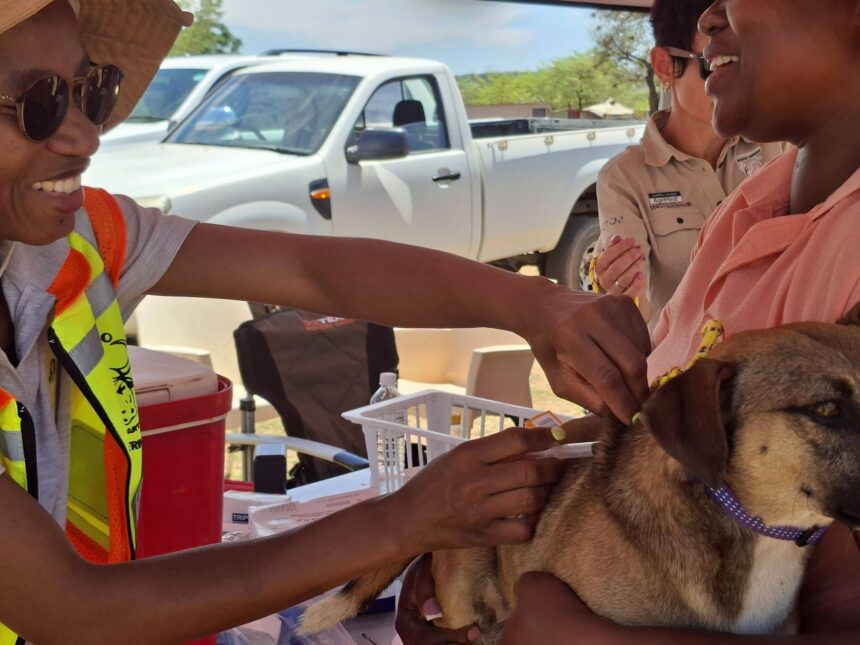
Access to animal healthcare and responsible pet ownership are essential for protecting animals, preventing the spread of diseases and keeping communities safe. In many communities, dogs, cats and other domestic animals depend on their owners for vaccinations, regular health checks, proper nutrition and suitable living conditions. However, not all pet owners have easy access to affordable veterinary services and animal welfare support. To address these needs, the Limpopo Department of Agriculture and Rural Development (LDARD), through its Waterberg District Veterinary Services, is working with the Modimolle Animal Welfare and Education Centre (MAWEC) and the Society for the Prevention of Cruelty to Animals (SPCA) to provide essential animal healthcare services in Phagameng Extension 10, Modimolle. The initiative forms part of the ongoing rabies vaccination campaign and aims to improve animal welfare while protecting both animals and people against preventable diseases.
The vaccination and animal welfare initiative provides a range of services for dogs, cats and donkeys. These include rabies vaccinations, five-in-one vaccinations, deworming, dipping and general health assessments. The programme also offers sterilisation services to support responsible animal population management and reduce the number of unwanted animals. In addition to veterinary care, participating animals can receive essential welfare supplies such as food, water, leashes, beds and blankets. This combination of healthcare and practical assistance recognises that animal welfare involves more than treating illness. Animals also need proper nutrition, protection from harsh weather and safe living conditions to maintain their health and wellbeing.
Rabies prevention is one of the main priorities of the campaign because rabies is a serious viral disease that can affect both animals and humans. The disease is usually transmitted through the saliva of an infected animal, most commonly when it bites another animal or a person. Once clinical symptoms develop, rabies is almost always fatal, making prevention and prompt medical attention essential. Vaccinating dogs and cats helps reduce the risk of transmission and protects the wider community. Regular vaccination campaigns are therefore an important part of public health protection, particularly in areas where people and domestic animals live in close contact. By bringing rabies vaccination services directly to Phagameng Extension 10, the initiative helps improve access to an important preventive healthcare service.
Rabies vaccination is particularly important for dogs because they remain a major source of human rabies infections in many parts of the world. However, cats and other susceptible mammals also require appropriate protection. Pet owners should ensure that their animals receive rabies vaccinations according to veterinary guidance and keep their vaccination records up to date. Vaccination does not only protect individual animals. It also helps reduce the circulation of the virus within animal populations, lowering the risk of exposure for other pets, livestock and people. Community participation is therefore essential to the success of rabies prevention programmes.
The five-in-one vaccination service provides additional protection against several important canine diseases. Depending on the vaccine formulation, these combinations can protect dogs against diseases such as canine distemper, parvovirus and infectious canine hepatitis, among other conditions. These diseases can cause serious illness and may be life-threatening, particularly in puppies and animals that have not received appropriate vaccinations. Following a suitable vaccination schedule helps strengthen a dog’s immune protection and reduces the risk of preventable infections. Veterinary professionals can assess each animal and advise owners on the appropriate vaccinations based on its age, health condition and previous vaccination history. Providing these services through community outreach makes preventive animal healthcare more accessible to pet owners.
Deworming is another important part of the animal healthcare services offered in Phagameng Extension 10. Internal parasites can affect an animal’s digestion, nutritional condition and general health. Heavy parasite infestations may cause weight loss, diarrhoea, weakness and other health complications. Regular deworming, based on veterinary advice, helps control internal parasites and supports healthy growth and development. External parasite control through dipping can also help manage certain ticks, fleas and other parasites that affect animals. Combining parasite control with vaccinations and health assessments allows veterinary teams to address several aspects of animal health during community outreach activities.
Health assessments provide an opportunity for veterinary personnel to examine animals and identify possible signs of illness, injury or poor physical condition. These assessments can help detect health problems that owners may not immediately recognise. Early identification allows animals to receive appropriate treatment or further veterinary attention where necessary. Regular health checks are especially important for young, elderly or vulnerable animals because their health needs may differ from those of healthy adult animals. Pet owners also benefit from receiving guidance on feeding, hygiene, parasite prevention and general animal care. Such information helps families make better decisions about the health and wellbeing of their pets.
Sterilisation services also form an important part of responsible pet ownership and animal welfare. Uncontrolled breeding can contribute to growing populations of unwanted animals, increasing pressure on animal shelters and welfare organisations. Sterilisation helps prevent unplanned pregnancies and can reduce the number of animals that end up abandoned or without proper care. The procedure can also provide certain health benefits, depending on the animal and its circumstances. Veterinary professionals can advise owners about the appropriate timing, potential benefits and recovery requirements. Making sterilisation services more accessible can support better animal population management and reduce some of the challenges associated with stray and unwanted animals.
The provision of food and water further highlights the campaign’s commitment to improving the overall welfare of animals. Proper nutrition supports healthy growth, immunity and general physical condition. Clean drinking water is equally important, particularly during hot weather when animals can become dehydrated. Leashes can help owners control their dogs during walks and prevent animals from roaming unsupervised. Beds and blankets provide comfort and protection, especially for animals exposed to cold conditions or sleeping on unsuitable surfaces. These practical resources can make a meaningful difference to animals whose owners face financial difficulties in meeting all their basic care needs.
The partnership between LDARD Waterberg District Veterinary Services, MAWEC and the SPCA demonstrates the value of cooperation in addressing animal health and welfare challenges. Government veterinary services contribute professional expertise and support for disease prevention, while animal welfare organisations play an important role in promoting humane treatment and responsible pet ownership. Working together allows these stakeholders to combine their knowledge and resources to reach communities more effectively. Such partnerships are particularly valuable when addressing public health concerns that require participation from both animal owners and local institutions. Continued cooperation can help strengthen vaccination coverage, improve access to veterinary services and encourage better animal care practices.
Responsible pet ownership remains central to the long-term success of these initiatives. Owning an animal involves providing adequate food, clean water, shelter, healthcare and protection from neglect and cruelty. Pet owners must also ensure that their animals receive the necessary vaccinations and seek veterinary assistance when they become sick or injured. Dogs should be kept under appropriate supervision to prevent uncontrolled roaming, unwanted breeding and possible contact with infected animals. Owners should also understand the importance of maintaining vaccination records and following veterinary recommendations. By taking these responsibilities seriously, households can improve animal welfare while reducing risks to other animals and members of the community.
Community awareness is equally important in preventing rabies and responding appropriately to possible exposure. Anyone bitten or scratched by an animal suspected of having rabies should wash the wound thoroughly with soap and running water for at least 15 minutes and seek urgent medical attention. Post-exposure treatment may be necessary, even if the wound appears minor. People should avoid handling animals that behave unusually or show signs of possible illness and should report suspected rabies cases to the appropriate veterinary or health authorities. Animals that bite people may also require assessment by veterinary professionals in accordance with applicable procedures. Prompt action can save lives and prevent further transmission of the disease.
The campaign in Phagameng Extension 10 also highlights the importance of taking veterinary services directly into communities. When essential animal healthcare is available closer to where people live, more pet owners have an opportunity to access preventive services and receive professional advice. Community-based campaigns can also help identify animals that require additional attention and educate residents about disease prevention. This approach is particularly valuable for households that may experience financial or transport barriers when seeking veterinary assistance. By combining vaccinations, health assessments and welfare support, the initiative addresses immediate animal healthcare needs while promoting responsible ownership over the longer term.
The LDARD Waterberg District Veterinary Services initiative, in partnership with MAWEC and the SPCA, represents an important contribution to animal health and public safety in Phagameng Extension 10, Modimolle. Through rabies vaccinations, five-in-one vaccinations, deworming, dipping, health assessments and sterilisation, the campaign provides essential services for dogs, cats and donkeys. The additional provision of food, water, leashes, beds and blankets reinforces the importance of treating animal welfare as a combination of healthcare, proper nutrition and humane care. Most importantly, strengthening vaccination coverage and educating pet owners helps protect communities against rabies and other preventable diseases. Continued cooperation between government departments, animal welfare organisations and residents will be essential to building healthier animal populations and safer communities throughout Limpopo.
Join 'Farmers Mag' WhatsApp Channel
Get the latest Farming news and tips delivered straight to your WhatsApp
CLICK HERE TO JOIN