Supporting emerging farmers with agricultural machinery, access to markets and opportunities to showcase their products is essential for building a strong and sustainable agricultural sector. In the Eastern Cape, the provincial government is stepping up efforts to help local farmers improve production, meet market standards and grow their operations into commercially viable agricultural businesses. The MEC for Agriculture, Nonceba Kontsiwe, recently spent an action-packed day in the OR Tambo District, focusing on practical interventions aimed at strengthening farming activities and creating opportunities for agricultural growth. Her programme included the handover of a tractor and farming implements to the Mgxabakazi Farming Project in Port St John’s, a visit to the Rural Market Centre and participation in the OR Tambo Agricultural Show. These engagements highlight the importance of combining production support, agricultural infrastructure and market development to help farmers build sustainable businesses.
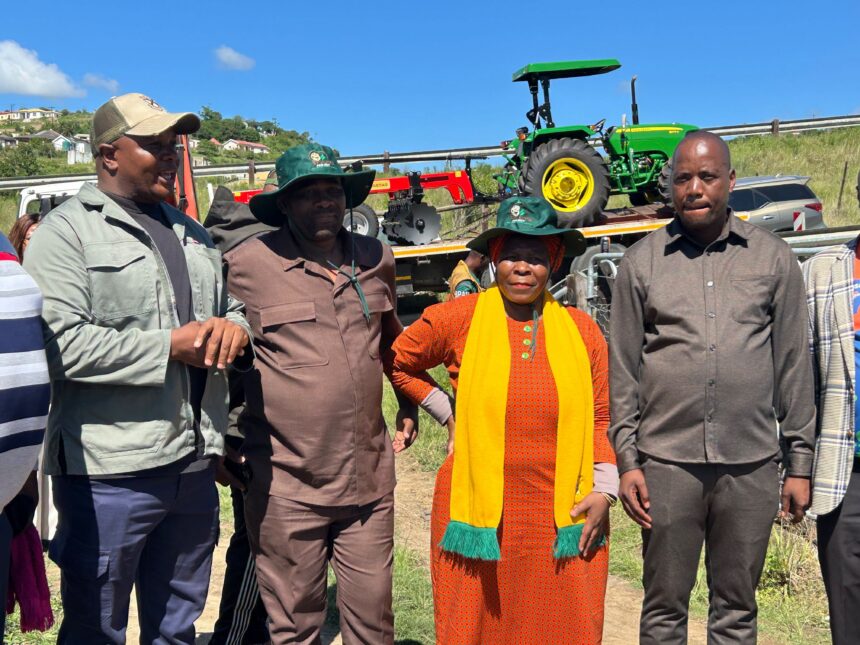
One of the key highlights of the MEC’s visit was the official handover of a brand-new tractor and farming implements to the Mgxabakazi Farming Project in Ward 4 of Port St John’s. Access to agricultural machinery is an important factor in improving productivity, particularly for emerging farmers who may struggle to afford expensive equipment. The mechanisation support is expected to improve the project’s farming operations by making land preparation faster and more efficient. With access to a tractor and suitable implements, farmers can carry out essential field activities more effectively and manage larger areas of land where conditions allow. Timely land preparation is particularly important because delays can affect planting schedules and ultimately influence crop performance. The support therefore represents an important investment in strengthening the productive capacity of the Mgxabakazi Farming Project.
Agricultural mechanisation plays a significant role in helping smallholder and emerging farmers overcome production limitations. Manual farming methods can require considerable time and labour, particularly when preparing land for planting or managing larger cultivation areas. Access to tractors and appropriate implements can reduce the time required for certain operations and allow farmers to use their available labour more efficiently. It can also help producers complete field preparation within suitable planting periods, which is important for making the most of seasonal rainfall and other growing conditions. However, machinery must be properly maintained and used according to the requirements of each farming operation. Effective management of the equipment will be important in ensuring that the benefits of the government support continue over the long term.
The tractor handover also reflects the broader importance of government assistance in helping emerging farmers move towards commercial agricultural production. Many smallholder farmers have the land, knowledge and willingness to expand their operations but face challenges related to finance, equipment, infrastructure and market access. These constraints can limit their ability to increase production and supply buyers consistently. Providing agricultural machinery can help address one part of this challenge by improving the capacity to cultivate land and manage production activities. However, commercial farming also requires access to quality inputs, technical guidance, reliable infrastructure and suitable markets. A coordinated approach to agricultural support is therefore essential if farmers are to turn increased production capacity into sustainable income.
During her visit to the district, MEC Kontsiwe also conducted a site inspection at the Rural Market Centre. The visit focused on local processing and marketing facilities intended to connect smallholder farmers with larger commercial supply chains. Market access remains one of the most important challenges facing emerging agricultural producers, especially those who lack established relationships with buyers and formal market channels. Having access to suitable marketing infrastructure can help farmers move beyond informal trading arrangements and explore opportunities within more organised agricultural markets. Processing facilities can also create opportunities to improve the handling and preparation of agricultural products before they reach consumers. These facilities form an important link between primary production and the wider agricultural value chain.
For farmers to benefit from commercial market opportunities, producing agricultural goods is only the first step. Buyers often have specific requirements relating to product quality, grading, packaging, volumes and delivery schedules. Farmers must understand these standards and develop production systems that allow them to meet them consistently. Market infrastructure can support this process by creating better connections between producers, processors and potential buyers. It can also help reduce some of the difficulties associated with marketing agricultural products, particularly where individual farmers have limited resources. The Rural Market Centre therefore represents an important part of efforts to strengthen agricultural market participation in the OR Tambo District.
The development of rural market facilities is particularly relevant to farmers who want to expand beyond household production and small-scale local sales. Commercial supply chains can offer opportunities to reach a wider customer base, but participation requires planning and consistent production. Farmers need to understand market demand before planting, calculate production costs and ensure that their crops or livestock products meet the required standards. They must also consider harvesting, storage, transportation and post-harvest handling to protect product quality. Stronger links between farmers and market facilities can help create an environment in which emerging agricultural businesses have greater opportunities to grow. This can contribute to improved rural economic activity and strengthen the role of agriculture in local development.
The MEC’s programme concluded at the OR Tambo Agricultural Show, held at the Port St John’s Sports Field. The event provided local farmers with an opportunity to display their agricultural produce and livestock while demonstrating the quality of their farming activities. Agricultural shows play an important role in promoting farming excellence, encouraging innovation and creating opportunities for producers to learn from one another. They also provide a platform for farmers to receive recognition for their efforts and compare their products against established competition standards. For emerging farmers, participation can help build confidence and encourage greater attention to quality and production practices. The show also highlighted the contribution of local farmers to food production and agricultural development in the district.
MEC Kontsiwe explained that the competition element of agricultural shows is intended to encourage farmers to improve their work and strive for better results. She said the competitions help motivate producers to do more by providing feedback on their performance. Farmers are informed about why particular entries win and what they did well, while those who do not win can use the information to identify areas that need improvement. This feedback creates a learning opportunity rather than making the competition solely about winning awards. It allows participants to understand the standards expected of quality agricultural products and livestock. Such practical learning can encourage farmers to improve their production methods and strengthen the overall quality of agricultural output.
The MEC also expressed excitement about seeing young people working hard and achieving success at the agricultural show. The participation and achievements of youth in agriculture are particularly encouraging at a time when the sector needs new skills, ideas and committed agricultural entrepreneurs. Young farmers have opportunities to contribute through crop production, livestock farming, agricultural technology, processing and other areas of the value chain. Recognising their efforts through agricultural competitions can help build confidence and encourage continued involvement in farming. Youth participation is also important for strengthening the future of rural agriculture and supporting generational renewal within farming communities. Creating an environment in which young people can access land, equipment, training and markets remains important for developing a more inclusive agricultural sector.
Agricultural shows also contribute to knowledge sharing and networking among farmers, agricultural organisations and other stakeholders. Producers can observe different farming practices, learn from successful participants and identify areas where they can improve their own operations. Livestock competitions can encourage greater attention to animal health, breeding and management, while crop displays can highlight the importance of quality production and proper handling. These events also create opportunities to recognise the hard work involved in agricultural production. By bringing farming communities together, agricultural shows help strengthen relationships and promote a culture of continuous improvement across the sector.
The activities undertaken by MEC Kontsiwe in the OR Tambo District demonstrate the importance of addressing several areas of agricultural development at the same time. The tractor and farming implements provided to the Mgxabakazi Farming Project support improved production capacity, while the Rural Market Centre offers an opportunity to strengthen market access and value chain participation. The agricultural show complements these interventions by encouraging quality, recognising achievement and promoting learning among farmers. Together, these initiatives reflect an approach that seeks to help emerging farmers progress from limited production capacity towards more sustainable and commercially focused agricultural enterprises. They also highlight the need for continued cooperation between government, farming organisations and local communities.
For the Eastern Cape’s agricultural sector, strengthening emerging farmers is important for improving food production, creating rural economic opportunities and supporting local livelihoods. Farmers need more than access to land to build successful agricultural businesses. They also require suitable machinery, production inputs, technical support, reliable infrastructure and access to buyers who can provide viable market opportunities. Government interventions that address these needs can help farmers improve their productivity and become more competitive. Equally important is ensuring that agricultural support translates into practical improvements in farm operations and long-term business sustainability. Continued engagement with farmers can help identify gaps and ensure that development programmes respond to the realities of agricultural production.
MEC Nonceba Kontsiwe’s visit to the OR Tambo District highlights the Eastern Cape government’s continued focus on supporting emerging farmers and strengthening the agricultural economy. From the mechanisation support provided to the Mgxabakazi Farming Project to the inspection of rural processing and marketing facilities, the engagements addressed important barriers to agricultural growth. The OR Tambo Agricultural Show further demonstrated the value of recognising farmers’ achievements, sharing knowledge and encouraging young people to participate in agriculture. These efforts reinforce the importance of building farming businesses that can produce quality food, meet market requirements and generate sustainable income. By strengthening production capacity while improving access to commercial markets, the department aims to support a more productive, inclusive and resilient agricultural sector that contributes to food security and economic development across the Eastern Cape.
Join 'Farmers Mag' WhatsApp Channel
Get the latest Farming news and tips delivered straight to your WhatsApp
CLICK HERE TO JOIN