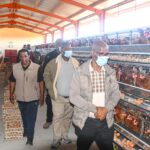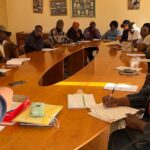
The Eastern Cape Provincial Government has reaffirmed its commitment to supporting the agricultural sector through improved infrastructure following a high-level engagement between Premier Oscar Mabuyane and Agri EC. The meeting brought together senior government leaders and representatives of the farming community to discuss transport infrastructure challenges that continue to affect agricultural production and rural development across the province. Accompanied by MEC for Transport Xolile Nqatha and MEC for Agriculture Nonceba Kontsiwe, Premier Mabuyane led a provincial executive delegation in discussions with an Agri EC delegation headed by Pieter Cloete. The engagement focused on identifying practical solutions to improve transport networks that are essential for farmers, rural communities and the broader provincial economy. Strengthening infrastructure remains a key priority because efficient transport systems play a direct role in improving agricultural productivity, reducing costs and supporting economic growth.
Agriculture is one of the most important economic sectors in the Eastern Cape, providing employment opportunities and contributing significantly to food production and exports. The province is known for its livestock farming, citrus production, deciduous fruit, vegetables and various other agricultural commodities that rely on dependable transport networks to reach local and international markets. Poor road conditions, damaged bridges and limited access to farming areas can increase production costs while delaying the movement of fresh produce. These infrastructure challenges also affect suppliers, processors and consumers, creating wider economic consequences. By engaging directly with Agri EC, the provincial government demonstrated its willingness to work collaboratively with industry stakeholders to address these long-standing concerns.
The meeting placed particular emphasis on transport infrastructure because roads remain the primary link between farms, processing facilities and markets. Many farming communities in the Eastern Cape depend on rural road networks that require regular maintenance and upgrades to remain accessible throughout the year. Heavy rainfall, flooding and aging infrastructure have contributed to deteriorating road conditions in many parts of the province. Poor roads increase vehicle maintenance costs, slow down deliveries and can result in product losses, particularly for perishable agricultural goods. Improving transport infrastructure is therefore regarded as an investment that benefits both farmers and the wider economy.
Premier Oscar Mabuyane led the provincial delegation with the objective of strengthening cooperation between government and the agricultural sector. The participation of MEC for Transport Xolile Nqatha highlighted the importance of coordinated infrastructure planning, while MEC for Agriculture Nonceba Kontsiwe brought valuable insights into the specific needs of farmers and rural producers. The involvement of multiple government departments reflects an understanding that agricultural development depends on cooperation across different sectors. Addressing infrastructure challenges requires coordinated planning, effective budgeting and ongoing communication between public institutions and industry representatives. Such partnerships are essential for developing practical and sustainable solutions.
Agri EC, under the leadership of Pieter Cloete, represented the interests of the farming community during the discussions. As one of the province’s leading agricultural organisations, Agri EC works closely with commercial farmers and agricultural stakeholders to promote sustainable farming and rural development. The organisation has consistently highlighted the importance of reliable infrastructure for maintaining agricultural competitiveness and ensuring food security. Farmers require dependable road networks not only for transporting crops and livestock but also for accessing agricultural inputs, veterinary services and emergency assistance. Open dialogue between government and agricultural organisations helps ensure that infrastructure planning responds to the realities experienced by producers on the ground.
The discussions also recognised the wider impact that transport infrastructure has on rural communities. Many rural residents depend on agriculture for employment and income, making reliable roads essential for accessing workplaces, schools, healthcare facilities and public services. Improved transport networks encourage economic activity by making it easier for businesses to operate in rural areas and attract new investment. Better roads also improve emergency response times and support the delivery of essential government services. Infrastructure development therefore contributes to broader social and economic progress beyond the agricultural sector alone.
For commercial farmers, efficient transport systems directly influence profitability and competitiveness. Fresh produce often has strict delivery schedules, particularly when destined for export markets or retail distribution centres. Delays caused by poor road conditions can reduce product quality, increase fuel consumption and raise overall operating expenses. Livestock producers also depend on safe transport routes to move animals efficiently while maintaining animal welfare standards. Investing in road infrastructure helps farmers reduce logistical challenges while improving the reliability of supply chains that serve consumers across South Africa and international markets.
The engagement highlighted the importance of creating an enabling environment for agricultural investment. Investors are more likely to support farming projects when essential infrastructure is available and maintained to acceptable standards. Reliable roads encourage expansion into new production areas while supporting the growth of agro-processing industries that depend on consistent deliveries of raw agricultural products. Infrastructure improvements also strengthen tourism, trade and other industries connected to rural economies. As agriculture continues to play a central role in the Eastern Cape’s development strategy, modern transport systems will remain a critical requirement for sustained growth.
Collaboration between government and the private sector has become increasingly important in addressing infrastructure challenges. Meetings such as this provide opportunities for stakeholders to exchange information, identify priorities and develop shared strategies for long-term improvement. Farmers possess valuable knowledge about local infrastructure needs, while government departments have responsibility for planning and implementing large-scale public projects. Bringing these perspectives together increases the likelihood of developing practical solutions that deliver measurable benefits. Continued engagement also strengthens trust and accountability between government and agricultural stakeholders.
The provincial government’s commitment to addressing transport challenges reflects a broader vision of strengthening agriculture as a driver of economic development. Well-maintained infrastructure supports food security, promotes job creation and encourages investment throughout agricultural value chains. It also enhances the competitiveness of Eastern Cape farmers in both domestic and export markets. As climate change and increasing production costs continue to challenge the agricultural sector, efficient transport systems become even more important for maintaining resilience and profitability. Long-term infrastructure planning will therefore remain essential for supporting sustainable agricultural development.
Premier Oscar Mabuyane’s engagement with Agri EC represents an important step towards improving the transport infrastructure that underpins the Eastern Cape’s agricultural sector. By bringing together government leaders, transport officials and agricultural representatives, the meeting demonstrated a shared commitment to addressing challenges affecting farmers, rural communities and the provincial economy. The discussions highlighted the importance of collaboration, strategic investment and coordinated planning in building stronger transport networks that support agricultural growth. As government and industry continue working together, improved infrastructure has the potential to reduce production costs, strengthen rural development and enhance the competitiveness of Eastern Cape agriculture. The partnership established through this engagement provides a solid foundation for creating lasting solutions that benefit farmers, businesses and communities across the province.
Join 'Farmers Mag' WhatsApp Channel
Get the latest Farming news and tips delivered straight to your WhatsApp
CLICK HERE TO JOIN