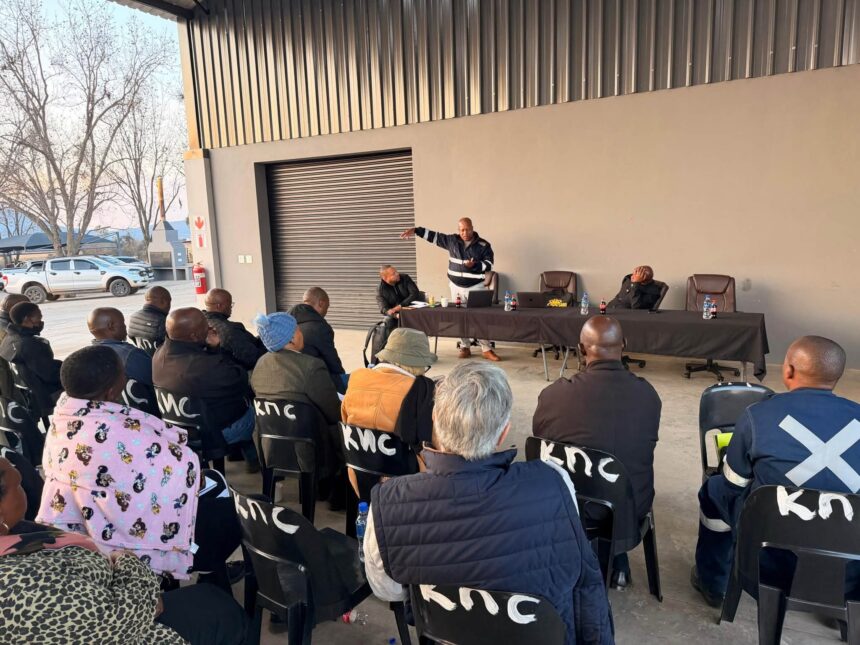
The revitalisation of underutilised agricultural land remains a key priority for the North West Department of Agriculture and Rural Development as it works to strengthen food production, create employment and improve rural livelihoods. As part of this commitment, MEC Madoda Sambatha recently met with members of the Khutso Naketsi Communal Property Association (CPA), accompanied by Head of Department Dr. Hans Kekana, officials from the Department of Land Reform and Rural Development and representatives from the Department of Water Affairs. The engagement formed part of the MEC’s ongoing programme to restore productive agricultural land under Communal Property Associations and return it to full commercial production. By bringing together key stakeholders, the meeting focused on addressing challenges while identifying practical solutions that will benefit the local community. The initiative reflects the government’s continued commitment to ensuring that land reform projects achieve their intended economic and social outcomes.
The Khutso Naketsi CPA farm represents an important investment in community development and agricultural transformation. The property was purchased by the government on behalf of the Communal Property Association with the goal of empowering beneficiaries through sustainable farming activities. The farm has significant potential to contribute to local economic development by creating employment opportunities and supporting agricultural production within the area. Properly managed agricultural projects can generate income for community members while strengthening food security and stimulating related business activities. The success of the farm therefore extends beyond agricultural production and has the potential to improve the overall quality of life for local residents.
During the engagement, stakeholders discussed strategies for restoring the farm to full productivity and ensuring that available resources are used effectively. Meetings of this nature provide an opportunity for government departments and community representatives to identify obstacles that may be delaying progress. Open communication also allows all parties to develop coordinated plans that respond to both immediate and long-term needs. Collaborative planning is particularly important for community-owned agricultural projects, where multiple stakeholders share responsibility for achieving success. Through continued dialogue, the project can benefit from stronger governance and more effective implementation.
One of the major developments highlighted during the meeting was the partnership between the Khutso Naketsi CPA and Afro Grow Poultry. This collaboration has been established to revive the poultry project and unlock the farm’s full agricultural potential. Partnerships between community organisations and experienced agricultural businesses can provide valuable technical expertise, operational support and commercial knowledge. Such collaborations improve the likelihood of long-term sustainability by combining local ownership with industry experience. The poultry project has the potential to become an important source of employment, income generation and food production within the community.
The poultry industry continues to offer significant opportunities for rural economic development in South Africa. Poultry production supports local food security while creating employment throughout the value chain, including feed supply, production, processing, transport and retail. Successful poultry enterprises can generate consistent income and contribute to the financial sustainability of community-owned farming projects. With proper infrastructure, management and market access, poultry farming can become a reliable contributor to local economic growth. Reviving the project at the Khutso Naketsi CPA farm therefore represents an important step toward achieving these broader development goals.
Despite the positive developments, the project continues to face several serious challenges that threaten its progress. Vandalism and theft of equipment and property have significantly affected the farm’s ability to operate efficiently and achieve its objectives. Damage to agricultural infrastructure increases operational costs and delays the implementation of development plans. These criminal activities not only affect physical assets but also reduce investor confidence and discourage further investment in community farming initiatives. Addressing security concerns remains essential to ensuring the long-term success of the project.
Government departments involved in the engagement acknowledged that overcoming these challenges will require cooperation from all stakeholders. Protecting agricultural infrastructure depends on coordinated efforts between government institutions, community members, law enforcement agencies and project partners. Strong community involvement can help safeguard valuable assets while promoting a shared sense of ownership and responsibility. Effective security measures also create a more stable environment that encourages agricultural investment and business growth. By working together, stakeholders can reduce risks and improve the project’s chances of long-term success.
MEC Madoda Sambatha reaffirmed his commitment to supporting farmers and ensuring that community agricultural projects achieve their intended outcomes. His continued engagement with Communal Property Associations demonstrates the department’s focus on transforming land reform projects into productive farming enterprises. Supporting these initiatives requires more than financial investment, as ongoing technical assistance, infrastructure development and institutional support are equally important. The department’s involvement reflects a long-term approach to agricultural development that prioritises sustainability and economic inclusion. Such leadership is essential in helping community projects overcome obstacles and realise their full potential.
The participation of the Department of Land Reform and Rural Development and the Department of Water Affairs also highlights the importance of integrated government support. Agricultural development depends on reliable access to land, water resources, infrastructure and extension services. Coordinated planning between different government departments improves the effectiveness of development programmes while ensuring that projects receive comprehensive support. This collaborative approach helps address multiple challenges simultaneously and creates stronger foundations for successful agricultural enterprises. Integrated service delivery remains a key component of sustainable rural development.
The meeting with the Khutso Naketsi Communal Property Association represents another important step toward restoring productive agricultural land and creating lasting economic opportunities within the community. Through partnerships such as the one established with Afro Grow Poultry, combined with ongoing government support, the project has the potential to become a successful model of community-led agricultural development. While challenges such as vandalism and theft continue to require urgent attention, the commitment shown by MEC Madoda Sambatha and all participating stakeholders demonstrates a shared determination to overcome these obstacles. By strengthening collaboration, protecting valuable agricultural assets and supporting productive farming initiatives, the project can contribute to job creation, food security and sustainable economic growth. The continued revitalisation of CPA-owned farms remains an important part of building resilient rural communities and advancing South Africa’s agricultural development goals.
Join 'Farmers Mag' WhatsApp Channel
Get the latest Farming news and tips delivered straight to your WhatsApp
CLICK HERE TO JOIN