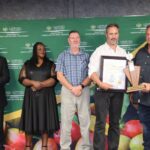
The message of rural dignity and agricultural empowerment took centre stage in uMthonjaneni as government leaders officially handed over four state farms to local beneficiaries. The event was led by KwaZulu-Natal MEC for Agriculture and Rural Development, Mrs Thembeni KaMadlopha-Mthethwa, together with the Minister of Land Reform and Rural Development, Mr Mzwanele Nyhontso. The handover took place at the Melmoth Sports Complex within uMthonjaneni Local Municipality in northern KwaZulu-Natal. It formed part of a broader programme that included the transfer of title deeds and farming implements to support new landowners. The initiative reflects ongoing efforts to strengthen rural economies through land access and productive agriculture.
The four farms were previously managed under the Proactive Land Acquisition Strategy and have now been transferred to qualifying beneficiaries from surrounding rural communities. These beneficiaries will take full control of the land and are expected to use it for active agricultural production. The shift marks a major step in land reform implementation, moving from state-held farms to community-based farming enterprises. Officials emphasised that the transfer is not symbolic but practical, as it includes tools and resources needed to begin farming operations. This approach is intended to ensure that beneficiaries can immediately start working the land without unnecessary delays.
MEC KaMadlopha-Mthethwa used the platform to stress the deeper meaning of land ownership in rural development. She explained that land represents more than physical space, as it serves as the foundation for food security and economic independence. Her message focused on the importance of using land productively to support households and strengthen rural economies. She urged beneficiaries to prioritise farming activities that can generate food, income and employment opportunities. The emphasis was placed on turning land reform into visible outcomes that improve living conditions in rural communities.
The MEC further encouraged beneficiaries to treat the farms as working assets rather than residential properties. She highlighted the need for consistent agricultural production to ensure long-term sustainability and economic growth. According to her address, land must be actively cultivated to create value and support local supply chains. She also pointed out that productive farming can help reduce unemployment while improving access to fresh food in rural areas. The message reinforced the idea that land access must be matched with responsibility and active participation in agriculture.
Traditional leaders were also called upon to support the expansion of agricultural land use. MEC KaMadlopha-Mthethwa urged traditional authorities to release more land for farming where possible to increase production capacity in rural areas. This appeal reflects ongoing challenges related to land availability in KwaZulu-Natal, where many emerging farmers still struggle to access viable farming space. Collaboration between government and traditional leadership is seen as essential in unlocking land that remains underutilised. This partnership is expected to strengthen rural development efforts and improve agricultural participation.
The joint initiative between provincial and national government departments demonstrates a coordinated approach to land reform. By transferring farms directly to beneficiaries, authorities aim to speed up the process of agricultural empowerment and reduce administrative delays. The inclusion of farming implements adds practical value to the handover, allowing new farmers to begin production immediately. This support is designed to improve the success rate of emerging farmers entering the agricultural sector. It also reflects a shift toward more hands-on implementation of land reform policies.
The programme in uMthonjaneni forms part of a wider national effort to promote equitable land distribution and rural development. Agriculture remains a key driver of employment and food production in South Africa, particularly in rural provinces such as KwaZulu-Natal. By enabling communities to take ownership of productive land, government aims to stimulate local economies and reduce poverty. The long-term impact of such initiatives depends on effective farm management, access to markets and continued institutional support. Sustained productivity will determine whether the transferred farms deliver lasting economic benefits.
The handover concluded with a strong message of responsibility for the new beneficiaries. They were encouraged to fully utilise the land and apply the resources provided to build successful farming operations. Government leaders reaffirmed their commitment to supporting emerging farmers through training, technical assistance and ongoing guidance. The transfer of the four state farms represents a significant step toward empowering rural communities and restoring dignity through land ownership. With proper use and sustained support, the initiative is expected to improve food security, create jobs and strengthen rural livelihoods in uMthonjaneni and surrounding areas.
Join 'Farmers Mag' WhatsApp Channel
Get the latest Farming news and tips delivered straight to your WhatsApp
CLICK HERE TO JOIN