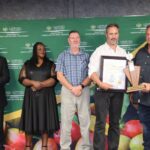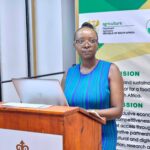
The North West Department of Agriculture and Rural Development has committed R424.1 million to farmer support and development in the 2026/27 financial year, marking a major push to strengthen agricultural production and rural economic activity in the province. The allocation sits within a broader budget of nearly R1.3 billion and places strong emphasis on infrastructure, production support and agro-processing as key drivers of growth. MEC for Agriculture and Rural Development Madoda Sambatha announced the funding during his budget vote speech in Mahikeng, highlighting the province’s focus on building a more competitive and inclusive agricultural sector. The funding plan aims to support both established and emerging farmers while expanding value chains across multiple commodities. It also reflects government’s continued effort to link primary agriculture with industrial development in rural areas.
A significant portion of the R424.1 million allocation, amounting to R235.2 million, will be channelled through the Comprehensive Agricultural Support Programme. This programme is designed to strengthen farming operations through infrastructure development, production inputs, extension services, training, project planning and market access support. Of this amount, R153.1 million has been prioritised for infrastructure and production inputs, which remain central to improving productivity on farms across the province. However, R13 million has been redirected towards agricultural college infrastructure to support skills development and training capacity. Additional allocations include R36.5 million for extension and recovery services, R22.7 million for training and capacity building, R15 million for programme planning, R6.4 million for marketing support and R1.5 million for information and knowledge management systems.
Infrastructure investment will focus heavily on livestock water provision and animal handling facilities across communal, state and privately owned farms. This intervention aims to reduce production risks linked to drought conditions and improve animal health management systems. Production support will include access to essential inputs such as seed, fertiliser and diesel, with priority given to maize, sunflower and dry bean production. These commodities remain key to food security and commercial farming viability in the province. Communal livestock development will also remain a priority in districts such as Bojanala and Dr Ruth Segomotsi Mompati, where rural livelihoods depend heavily on animal production systems.
The department has also committed to diversifying agricultural production by supporting high value and emerging commodities. These include turmeric, saffron, castor oil, potatoes and rabbit farming, which are seen as important for expanding income opportunities and creating new market segments. Eight producers are expected to receive direct implementation support from the second quarter of the financial year, while approximately 23 enterprises will benefit from agro-processing assistance. The programme also includes support for moringa and cannabis enterprises, reflecting a broader strategy to explore alternative agricultural industries. This diversification approach aims to reduce reliance on traditional crops while increasing resilience in the sector.
MEC Sambatha emphasised that agro-processing is central to the future competitiveness of agriculture in the province. He explained that agricultural development cannot depend solely on production, but must include value addition to unlock economic potential. Agro-processing is expected to improve food security, create employment opportunities and expand access to new markets. It also allows emerging and black farmers to participate more meaningfully across the agricultural value chain. The department will continue working with the Agricultural Research Council to introduce technologies that reduce post-harvest losses and improve product quality. These partnerships are intended to strengthen local processing capacity and support sustainable agricultural industries.
The province is also intensifying efforts to strengthen the potato industry through its Potato Enterprise Development Programme, launched in 2022. North West remains one of South Africa’s key potato-producing regions, with around 3 000 hectares planted annually, although production has gradually declined over time. The programme aims to support emerging farmers in establishing sustainable two-hectare potato enterprises. It also focuses on developing Kgora as a provincial seed potato production centre. Lessons from the programme highlight the importance of infrastructure, training and compliance with water-use regulations for long term success.
Beekeeping development is another growing focus area within the province’s agricultural strategy. The department previously distributed 2 000 bee supers in partnership with the Mineworkers Development Agency and continues to support awareness campaigns across all four districts. Emerging beekeepers have received training opportunities, equipment and access to national and international conferences. Partnerships with the Agricultural Research Council, MDA and Sibanye-Stillwater will continue, while North West prepares to host the National Bee-Con 2026 in collaboration with the South African Bee Industry Organisation. This initiative is expected to strengthen knowledge exchange and expand market opportunities for local producers.
Livestock development also remains a priority, with plans to distribute at least 71 breeding bulls during the current financial year. This programme is implemented in partnership with traditional authorities, youth and women structures, military veterans and people living with disabilities. Additional support from Sibanye-Stillwater has contributed 12 breeding bulls for communal farmers in Marikana, with provincial government adding two more to strengthen genetic improvement efforts. These interventions aim to improve herd quality and increase productivity in communal farming systems. They also support inclusive participation in livestock production across vulnerable groups.
Further investment of R54.36 million from the Department of Land Reform and Rural Development will support communal livestock infrastructure following challenges linked to recent foot and mouth disease outbreaks. The funding will be used for movable kraals, handling facilities, boreholes, crush pens and cold storage systems. These improvements are expected to strengthen disease control, improve livestock management and enhance grazing systems in communal areas. The intervention also supports long term resilience in rural farming communities that depend on livestock for income and food security.
The North West agriculture budget signals a strong commitment to transforming rural economies through targeted investment and strategic partnerships. By combining infrastructure development, production support, agro-processing expansion and livestock improvement, the department aims to build a more resilient and inclusive agricultural sector. The focus on emerging farmers and high value commodities reflects a broader shift towards diversification and value chain integration. These efforts are expected to generate employment, improve food security and strengthen rural livelihoods across the province. The success of this programme will depend on continued collaboration between government, private sector partners and farming communities working toward shared growth and sustainability goals.
Join 'Farmers Mag' WhatsApp Channel
Get the latest Farming news and tips delivered straight to your WhatsApp
CLICK HERE TO JOIN