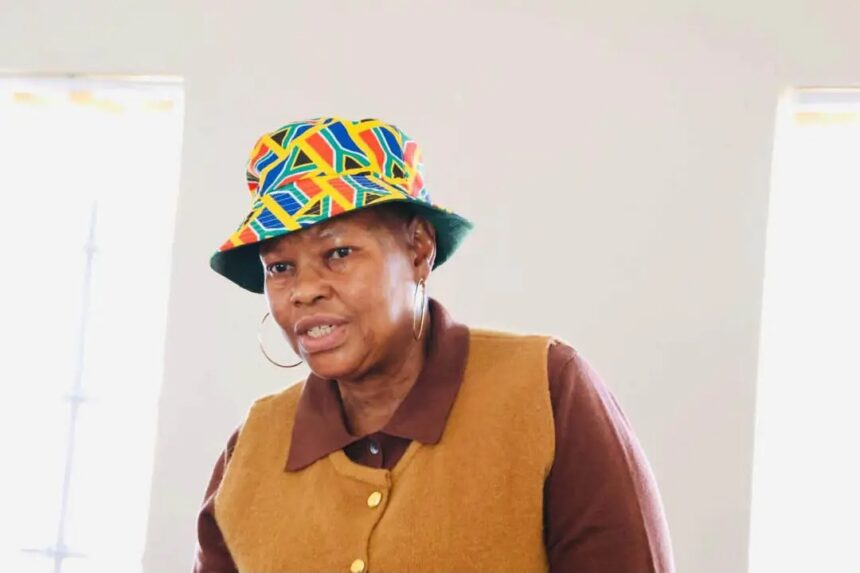
The Limpopo Department of Agriculture and Rural Development, led by MEC Ms Nakedi Grace Kekana, has intensified its push for rural transformation through direct community engagement in Selwane Tribal Authority Hall, Ward 18 under Ba-Phalaborwa Local Municipality. The session brought provincial leadership face-to-face with traditional leaders, farmers and local agricultural stakeholders in a focused effort to address barriers affecting rural food production. The engagement reflected a practical shift in governance, where policy discussions are taken directly to communities that depend on agriculture for survival. The atmosphere inside the hall reflected urgency and cooperation as stakeholders shared real challenges affecting farming activities. This approach signals a stronger commitment to building a self-reliant rural economy in Limpopo.
During the engagement, MEC Kekana focused on aligning government agricultural programmes with the everyday realities of subsistence and emerging farmers in the area. Many local farmers raised concerns about limited access to irrigation systems, farming inputs and technical support, which continue to restrict productivity in rural communities. The MEC responded by outlining departmental interventions designed to improve service delivery and unlock agricultural potential in Ba-Phalaborwa. These interventions include targeted support for smallholder farmers, improved extension services and structured development programmes aimed at scaling production. The goal is to ensure that farmers move beyond subsistence farming into more sustainable and commercially viable operations.
A key focus of the session was the importance of unlocking underutilised land and natural resources to strengthen food security in the region. MEC Kekana emphasised that Ba-Phalaborwa holds significant agricultural potential that can support both household food production and local economic development. By working closely with traditional leaders, the department aims to improve land use planning and ensure that available resources are used productively. This collaboration is seen as essential for resolving long standing challenges related to land access and coordination in rural farming areas. The approach is designed to ensure that agricultural development benefits entire communities rather than isolated individuals.
The engagement also highlighted the role of targeted government support programmes in addressing service delivery gaps that affect rural farmers. Many emerging farmers struggle with inconsistent access to agricultural inputs, infrastructure support and market opportunities. MEC Kekana detailed departmental plans to strengthen support systems that assist farmers in improving yields and expanding production capacity. These programmes are designed to provide both immediate relief and long term development support, ensuring that farmers can build stable agricultural enterprises. By focusing on practical solutions, the department aims to reduce barriers that limit rural economic participation.
Traditional leadership played an important role in the discussion, reinforcing the importance of collaboration between government and community structures. Leaders from the Selwane Tribal Authority expressed support for initiatives that aim to transform local agriculture into a driver of economic growth. Their involvement is crucial in ensuring that development programmes are implemented effectively at community level. The partnership between government and traditional authorities is expected to improve coordination in land allocation, farming support and local development planning. This collaborative model strengthens accountability and ensures that agricultural interventions reach the intended beneficiaries.
The session also served as a platform for farmers to directly communicate their needs and experiences to provincial leadership. This direct engagement allowed government officials to better understand the day-to-day constraints faced by rural agricultural producers. Issues such as drought resilience, input affordability and access to training were central to the discussions. MEC Kekana used the opportunity to reassure participants that the provincial government remains committed to responsive and people-centred service delivery. The feedback gathered during the session will inform future agricultural planning and resource allocation in the district.
Food security emerged as a central theme throughout the engagement, with emphasis placed on increasing local production capacity to reduce dependency on external food sources. The department’s strategy focuses on empowering households to produce sufficient food while also enabling surplus production for local markets. This dual approach is expected to improve nutrition, create income opportunities and strengthen rural economies. By investing in small-scale farmers, the government aims to build a more resilient and inclusive agricultural system. The long term vision is to turn rural communities like Ba-Phalaborwa into productive agricultural hubs.
MEC Kekana reaffirmed that the Limpopo Provincial Government is committed to hands-on leadership that prioritises direct engagement with communities. The Selwane Tribal Authority session demonstrated a governance model that values dialogue, responsiveness and practical intervention over distant policy implementation. By bringing decision makers closer to rural farmers, the department aims to accelerate agricultural transformation and improve service delivery outcomes. The engagement reflects a broader commitment to building a sustainable rural economy where every household has the opportunity to participate in agriculture. As interventions roll out, Ba-Phalaborwa is positioned to become a stronger contributor to Limpopo’s agricultural productivity and long term food security goals.
Join 'Farmers Mag' WhatsApp Channel
Get the latest Farming news and tips delivered straight to your WhatsApp
CLICK HERE TO JOIN