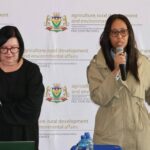
The Limpopo Department of Agriculture and Rural Development has taken a major step toward strengthening agricultural education by officially inducting and orienting newly appointed Advisory Board members for Madzivhandila College of Agriculture and Tompi Seleka College of Agriculture. The ceremony took place at Bolivia Lodge in Polokwane on 08 May 2026 and brought together senior government officials, board members and stakeholders in the agricultural education sector. The induction marks a renewed commitment to improving governance, academic excellence and institutional performance within the province’s agricultural training system. It also signals government’s focus on building a strong pipeline of skilled agricultural professionals who can support food production and rural development. The event combined recognition of outgoing leadership with the introduction of a new board tasked with shaping the future of agricultural education in Limpopo.
The Department also used the occasion to honour outgoing board members for their dedication, leadership and contribution to the development of the two agricultural colleges. Their work over the years helped strengthen institutional structures and improve the overall performance of agricultural training programmes. Many of the achievements within the colleges are attributed to their guidance and oversight during periods of transformation and growth. Their departure was marked with appreciation for their role in building a foundation for future progress. This recognition highlighted the importance of continuity and institutional memory in maintaining stable governance systems within public education institutions.
Opening the session, Head of Department Mpho Mashamba emphasised the critical responsibility of the Advisory Board in strengthening agricultural education and advancing food security in the province. She highlighted that the future of agriculture depends on strong leadership, strategic planning and commitment from all stakeholders involved in the sector. She stressed that the board must focus on producing graduates who are not only academically competent but also practically skilled to contribute to the agricultural economy. Her message reinforced the idea that agricultural colleges play a central role in developing human capital for rural development and national food systems. She further encouraged board members to remain committed to institutional excellence and innovation in agricultural training.
The Advisory Board was established to provide strategic leadership and policy guidance to the MEC and ensure that the colleges produce skilled, competitive and industry-ready graduates. Government has set an ambitious target of increasing student participation in agriculture to 600 learners, reflecting the growing demand for agricultural expertise in the province. This target is intended to expand access to agricultural education and encourage more young people to pursue careers in farming, agribusiness and agricultural science. The board will play a key role in aligning academic programmes with industry needs and ensuring that training remains relevant to modern agricultural challenges. This includes improving curriculum development, strengthening partnerships and enhancing student support systems.
Nakedi Kekana emphasised the importance of collaboration between agricultural colleges, government, business and the private sector. She noted that such partnerships are essential for producing graduates who are globally competitive and responsive to market demands. She also highlighted that the agricultural sector is rapidly evolving and requires institutions that can adapt to technological advancements and changing industry requirements. According to her, collaboration will help bridge the gap between theoretical learning and practical industry experience. This approach is expected to improve graduate employability and strengthen the province’s agricultural value chain.
The newly appointed Advisory Board is chaired by Edward Nesamvuni and includes members such as Dr John Mudau, Dr Mushoni Bulagi, Dr Ndivhuho Ranwedzi, Dr Thabiso Satekge, Mr Mothima Mannya and Mr Johannes Ramaru. Each member brings specialised expertise in agriculture, research, governance and education, which will contribute to the strategic direction of the colleges. The inclusion of diverse professionals is intended to ensure balanced decision making and improved institutional oversight. Departmental officials Mr Nndwakhulu Nevhutalu from Human Resources, Mr Jonathan Mpe from the MEC’s office and Mr Masoka Senoamadi from Finance also form part of the governance structure. Their involvement ensures coordination between administrative systems, financial management and institutional planning.
Board Chairperson Prof Nesamvuni expressed appreciation for the confidence placed in the new board and committed to improving institutional efficiency and governance. He stated that the board will focus on strengthening financial management systems, improving accountability and ensuring that resources are used effectively to support teaching and learning. He also highlighted the importance of creating strong academic environments that support both students and lecturers. His commitment reflects a broader goal of transforming agricultural colleges into centres of excellence that produce highly skilled graduates. The board is expected to play a proactive role in addressing operational challenges and driving long term institutional sustainability.
The induction of the new Advisory Board marks an important milestone in the development of agricultural education in Limpopo. It reflects government’s continued investment in skills development, rural empowerment and food security. By strengthening leadership structures at Madzivhandila and Tompi Seleka Colleges of Agriculture, the province aims to build a more responsive and effective agricultural training system. The collaboration between government, academia and industry is expected to produce graduates who can contribute meaningfully to agricultural growth and innovation. As the new board begins its mandate, it carries the responsibility of shaping the future of agricultural education and ensuring that Limpopo remains a key contributor to South Africa’s agricultural development.
Join 'Farmers Mag' WhatsApp Channel
Get the latest Farming news and tips delivered straight to your WhatsApp
CLICK HERE TO JOIN