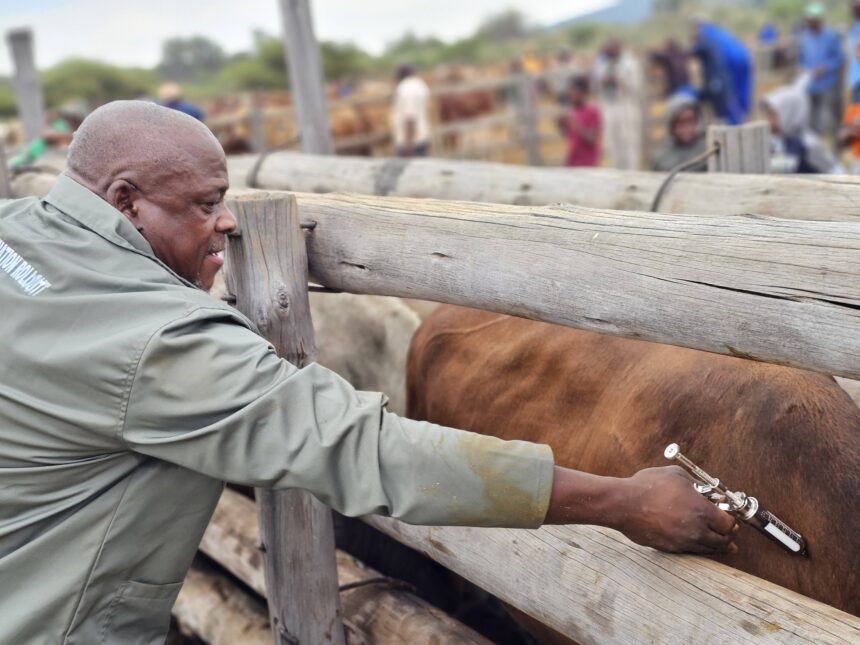
South Africa continues to take firm and measurable steps to contain the spread of Foot and Mouth Disease, with vaccination campaigns gaining momentum across the country. Yesterday’s vaccination drive in Swaartkopfontein stands as a clear example of this progress, where more than 50 communal livestock were successfully vaccinated. This effort reflects a focused commitment to protect small scale farmers who depend on healthy herds for income and food security. It also shows how coordinated action at local level supports broader national goals. The steady rollout of vaccines highlights a practical response to a disease that has long threatened the stability of the livestock sector.
The scale of the national vaccination campaign has grown rapidly since February 2026, with more than 1.7 million cattle vaccinated to date. This figure signals real progress in limiting the spread of the disease and reducing the risk of outbreaks in vulnerable regions. Vaccination plays a direct role in controlling transmission, especially in communal farming areas where animals often graze together. By targeting these high risk zones, authorities improve the overall effectiveness of the campaign. Each vaccinated animal reduces the likelihood of infection spreading further, which protects entire farming communities.
Supply has been a key factor in sustaining this momentum, and recent developments have strengthened capacity on the ground. The arrival of 1.5 million vaccine doses from Biogenesis Bago over the past weekend has boosted the national stock significantly. This increase allows for faster distribution and wider coverage, particularly in provinces that require urgent intervention. More shipments are expected in the coming weeks, which will help maintain continuity in vaccination efforts. Reliable supply ensures that field teams can operate without delays, which is critical in disease control campaigns.
The Swaartkopfontein drive also highlights the importance of community engagement in managing animal health. Farmers who participate in vaccination programs not only protect their own livestock but also contribute to regional biosecurity. Veterinary teams work closely with communities to educate farmers about disease prevention and early detection. This approach builds trust and improves compliance, which leads to better outcomes. Effective communication ensures that farmers understand the value of vaccination and remain active partners in the process.
Biosecurity remains a central focus in the fight against Foot and Mouth Disease, and vaccination is only one part of a broader strategy. Movement control, surveillance, and rapid response systems are all essential in limiting the spread of the virus. When combined with vaccination, these measures create a stronger defense against outbreaks. Protecting livestock also protects jobs, food supply chains, and export potential within the agricultural sector. A stable livestock industry supports both rural livelihoods and the national economy.
The continued expansion of vaccination efforts shows that South Africa is taking a proactive stance in managing animal health risks. Progress seen in areas like Swaartkopfontein reflects a wider commitment to reach every farmer and protect every herd. The numbers achieved so far indicate that the strategy is working, but sustained effort remains necessary. With increased vaccine supply and strong coordination between government and communities, the country is better positioned to control the disease. These actions are building a more secure future for agriculture, where resilience and preparedness remain priorities.
Join 'Farmers Mag' WhatsApp Channel
Get the latest Farming news and tips delivered straight to your WhatsApp
CLICK HERE TO JOIN