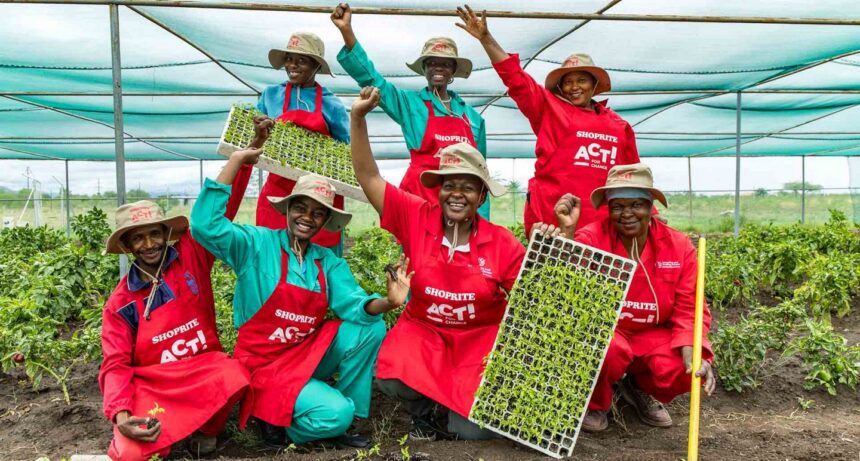
Community food gardens across South Africa have another opportunity to strengthen their operations, improve food production and make a greater difference in their communities. Shoprite has opened entries for its 2026 Act For Change Food Garden Competition, offering R1 million in tailored support to five winning gardens. The competition recognises community-based food gardens that contribute to food security, develop practical skills and create opportunities for people to improve their livelihoods. Rather than focusing only on the amount of food produced, it considers the wider social and economic value of each garden. Entries close on 15 November 2026, giving eligible community food gardens an opportunity to showcase their work and secure support for future development.
The competition follows the success of Shoprite’s inaugural Act For Change Food Garden Competition, which attracted nearly 600 entries. Earlier this year, ACFS Khunadi Food Garden in Mogoto Village, Limpopo, took first place, alongside five other finalists who shared R1 million in tailored support. The support was designed to address the individual needs of the winning gardens and help them improve their operations. The first competition demonstrated the important role that community food gardens play in producing fresh food, developing skills and supporting households. It also showed how targeted investment can help local initiatives overcome practical challenges and increase their contribution to food security.
For the 2026 competition, five winning gardens will share R1 million in tailored support. Each garden will receive assistance based on a needs assessment to identify the resources and improvements that could make the greatest difference to its development. Support may include training, gardening resources and infrastructure to help improve production and increase harvests for the communities served. This approach recognises that community food gardens have different priorities depending on their size, location, resources and stage of development. Some may need better irrigation, while others could benefit from improved growing facilities, soil management or technical training.
Shoprite’s Chief Sustainability Officer, Sanjeev Raghubir, said community food gardens put the group’s purpose into practice by making fresh food more accessible, creating opportunities for people to learn and earn, and bringing communities together. He explained that the competition aims to recognise gardens already making a positive contribution and provide support to help them grow. This focus reflects the wider value of community agriculture in South Africa, where local food production can help households access fresh produce while encouraging participation in economic activity. Food gardens can also provide practical learning opportunities for young people and community members interested in agriculture. With the right support, these initiatives can become more productive and better equipped to serve their communities.
The competition will assess more than the volume of food produced by each garden. Judges will consider the garden’s social impact, the skills it shares and the way it operates within its community. Its contribution to improving food security and the positive difference it makes to the people it serves will also be important. This broader assessment recognises that a successful community food garden should create value beyond its harvest. It can provide a place where people learn about crop production, work together and develop knowledge that they can use in their own households or future agricultural activities. Gardens that combine food production with skills development and community involvement demonstrate the wider potential of local agriculture.
The experience of the inaugural winners shows how tailored support can translate into practical improvements. ACFS Khunadi Food Garden in Mogoto Village, Limpopo, has benefited from a shade-net structure that helps protect its crops. Shade-net infrastructure can assist growers in managing exposure to harsh weather conditions and protecting plants during important stages of development. The garden’s experience highlights the value of identifying the specific challenges faced by each project before deciding what support it needs. Its first-place achievement also provides an example of the work taking place in community food gardens across the country. The competition gives other gardens an opportunity to demonstrate similar achievements and identify areas where additional assistance could strengthen their operations.
In the Eastern Cape, Ngxanga School Garden in Libode has used its support to install a new irrigation system. The improvement has enabled the previous second-place winner to expand its growing area and increase food production. Reliable access to water is essential for successful crop production, particularly where gardens depend on consistent harvests to support learners and surrounding communities. Project Manager Neziswa Mlenzana said the garden has also been able to employ three young people from the community permanently. Wednesdays are now set aside for learners to work in the garden, giving them an opportunity to gain practical experience in food production. The project demonstrates how investment in community agriculture can support food production while creating employment and learning opportunities.
P Agricultural Group in Soweto, which placed third in the inaugural competition, has also used the experience to challenge perceptions about farming. Project Manager Phetole Raseropo said people who previously viewed agriculture as an activity mainly associated with rural areas were beginning to recognise it as an opportunity to learn, earn and participate. This is an important message for urban and township communities, where limited access to agricultural opportunities can discourage people from considering farming as a business or livelihood. Community food gardens can introduce residents to practical production skills and show how available spaces can be used to grow food. They can also help young people see agriculture as a sector with opportunities beyond traditional farming.
Other winning gardens have focused on improving their growing spaces, soil health and production knowledge. In Gauteng, Hope Park Children’s Health Campus Garden has started a second garden, while Plenty Green Africa in Tsakane has redesigned its growing area. Plenty Green Africa is also applying lessons from training in soil health, pest control and seed sowing. These skills are important because successful food production depends on more than planting seeds and waiting for a harvest. Gardeners need to understand how to maintain healthy soil, manage pests and select suitable planting methods. Applying this knowledge can help gardens make better use of available resources and improve the quality and consistency of their produce.
The Food Security Project in Gonubie in the Eastern Cape is concentrating on restoring soil health through wood-chip mulch and improved compost-making methods. Healthy soil provides the foundation for productive gardens because it supports plant growth, water retention and nutrient availability. Composting also allows gardeners to turn suitable organic materials into a resource that can improve growing conditions. Gardener Delight Omoike said some beneficiaries want to apply what they have learnt about permaculture and worm-based composting in their own homes or fields. This shows how skills developed in a community garden can extend beyond the project itself. When participants share knowledge and use it in other growing spaces, the benefits can reach more households.
Community food gardens can play an important role in addressing food insecurity, particularly where households face challenges accessing affordable fresh produce. Growing vegetables locally can improve access to nutritious food and help communities become more involved in their own food supply. These gardens can also create opportunities for people to develop agricultural skills and participate in small-scale production. However, they need suitable infrastructure, reliable water supplies, healthy soil and ongoing management to remain productive. Access to training and technical support can help gardeners make informed decisions and avoid common production problems. Shoprite’s competition aims to strengthen these initiatives by directing assistance towards the needs of each winning garden.
The 2026 competition forms part of Shoprite’s wider commitment to supporting community food gardens. The group reached a milestone of 300 supported gardens in July 2026, reflecting the scale of its work in this area. The programme also provides opportunities for participating gardens to connect their production with potential customers. On 27 October 2026, food gardens involved in Shoprite’s existing programme had an opportunity to showcase and sell their fresh produce in stores during the latest Act For Change Market Day. The event took place across South Africa, Botswana and Namibia. Such opportunities can help community growers gain exposure, develop market experience and understand the commercial side of producing food.
The opportunity to sell produce is particularly important for gardens that want to move beyond growing food only for their immediate beneficiaries. Market access can help community projects generate income, purchase additional inputs and strengthen their long-term operations. However, supplying customers also requires attention to product quality, reliable quantities and consistent production. Events such as the Act For Change Market Day can give gardens valuable experience in presenting and selling their produce. They also help connect local food production with consumers who may not otherwise know about the work taking place in their communities. This creates a stronger link between community agriculture, food security and local economic participation.
Community-based food gardens interested in entering the 2026 competition must meet the eligibility requirements. Entrants must be at least 18 years old and represent a community-based food garden. Private home gardens, private companies and close corporations are not eligible. Applicants must provide a short description of the garden’s history, purpose and role in the community, together with photographs showing the garden and its activities. The competition is open to eligible community food gardens across South Africa. Entries are free and can be submitted online at actforchangefoodgardencompetition.datafree.co, with no data costs applying.
The closing date for entries is 15 November 2026, and the winners are expected to be announced before April 2027. Community food gardens should use the opportunity to explain not only what they grow but also how their work benefits the people around them. Their applications can highlight their contribution to food security, skills development, employment and community participation. Photographs can help demonstrate the garden’s activities, growing areas and progress. A clear description of the challenges the garden faces may also help explain where tailored support could make a difference. The competition offers an opportunity for gardens to gain recognition while potentially securing resources that can strengthen their future work.
Shoprite’s 2026 Act For Change Food Garden Competition places community agriculture and food security at the centre of an important national initiative. The experiences of the inaugural winners show that targeted support can improve infrastructure, increase production, create employment and spread valuable agricultural knowledge. The new competition gives other community food gardens the chance to demonstrate their impact and access assistance suited to their needs. With R1 million in tailored support available to five winning gardens, the initiative offers a meaningful opportunity for projects that are already making a difference. Community food gardens interested in taking part should submit their entries before 15 November 2026 and show how their work is helping build stronger, more food-secure communities.
Join 'Farmers Mag' WhatsApp Channel
Get the latest Farming news and tips delivered straight to your WhatsApp
CLICK HERE TO JOIN